Companion (2025) | Fatuus Ex Machina
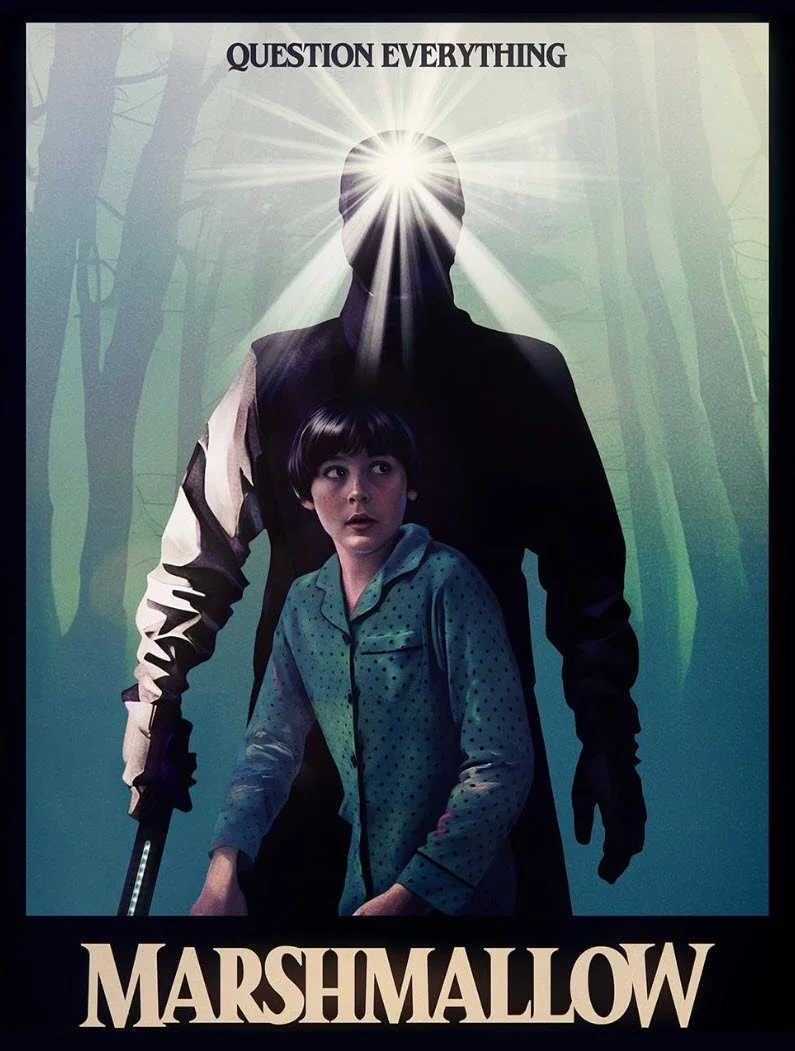
Companion has been on my to-watch list for a while, simply because I kept seeing its intriguing marketing poster appear on movie websites I visit. I knew very little about it other than the positive buzz surrounding it. When it came to streaming, I saw the trailer for it play, and it gave me a lot more insight into what the movie was about and the tone to expect. However, I would say that you’re better off not watching any of the trailers beforehand and just going in blind because the first twenty minutes of the movie do a lot to set up a twist that the trailers completely spoil. Unfortunately, the moment the twist is revealed also happens to be the point at which the movie begins to dramatically decline in quality.

Image: Warner Bros.
Pros
Solid acting from the cast
Some of the humor is genuinely funny
Under two hours long and moves at a steady pace
Decent use of subtle cues and visual details to tie into various characters and events
Cons
World-building is a broken mess
The whole plot relies on characters being extremely stupid
“Smart” characters are only as smart as the writers
Trailers spoil and undo all the effort in the opening act to lead into a surprising moment
Plot & Thoughts
Iris (Sophie Thatcher) is a pretty, young lady who has seemingly met the love of her life, Josh (Jack Quaid), while shopping at a local grocery store. Though a little nervous about meeting his friends, she joins him on a trip out to a remote lodge owned by a wealthy man named Sergey (Rupert Friend). Josh’s friend Kat (Megan Suri), who is dating Sergey, as well as his friend Eli (Harvey Guillén) and Eli’s boyfriend, Patrick (Lukas Gage), are all there when they arrive. It’s a fun night in with everyone, as most of them partake in food and lots of alcohol while they connect through stories. The following morning, however, things take a dark turn when Iris is assaulted and forced to defend herself. When the truth comes out about what happened and why, everything starts to spiral out of control.
There will be spoilers in this review because a lot of what I have to say ties directly into the central premise of the movie and events that take place later on.
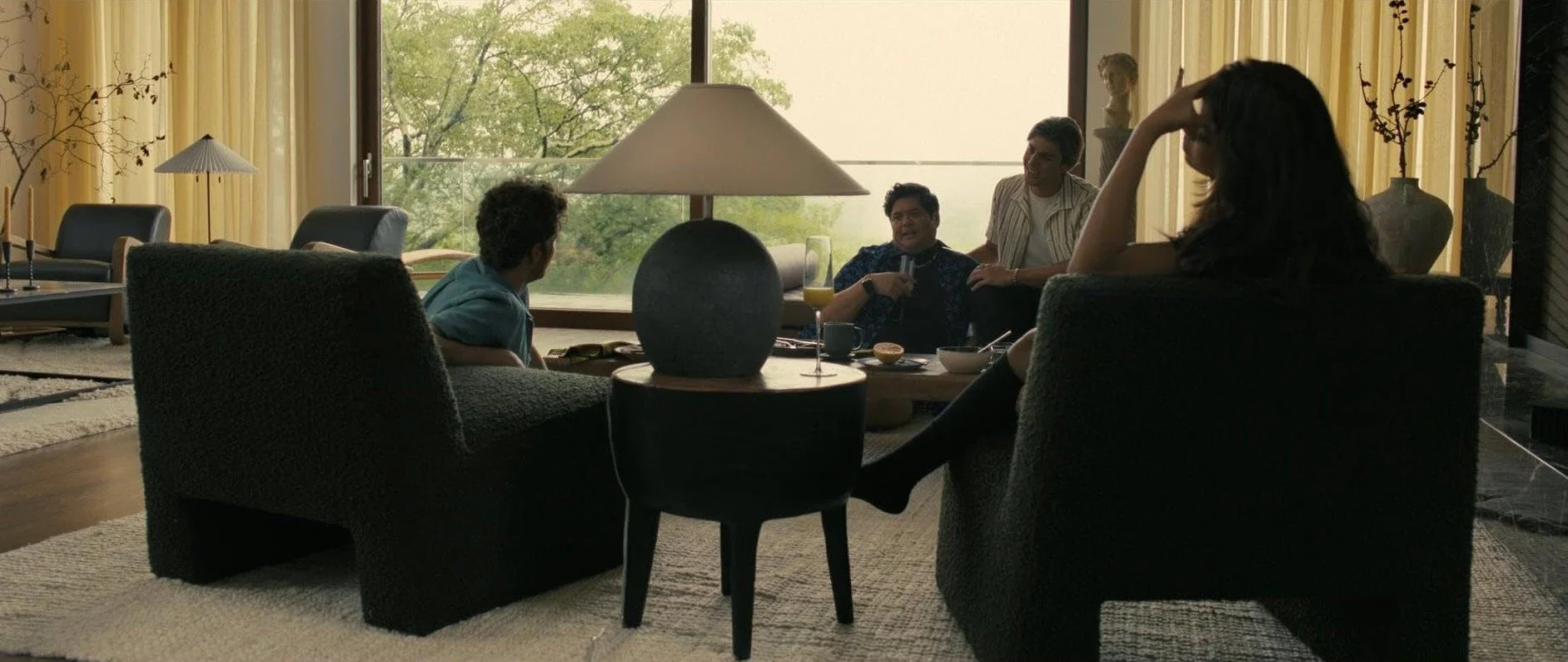
Image: Warner Bros.
The first act of this film is what I like most about it because it does a decent job of setting up the characters and making you sympathize with Iris before the big traumatic reveal. This is where the actors do a great job of establishing their characters. The movie also subtly and not-so-subtly hints at what the big reveal is going to be in ways that I appreciated. Why they chose to spoil everything in the trailers, I’ll never know, but I’d recommend watching the movie with as little information as possible if you’re interested in seeing it. Just be aware: what I just said is not a recommendation for Companion.
I wanted to like Companion. There were plenty of places where the humor worked rather well, and I thought it was kind of fun. Perhaps in isolation, those funny moments paint a pleasant picture of a horror movie with some dark humor thrown in. Unfortunately, I tend to notice things when I watch movies. It’s something of a curse to see details when I pay attention to what’s happening, I suppose. I just tend to get hung up on facts that don’t make sense in the context of the story the movie is trying to tell. If only I weren’t so alert and capable of thought when I watched things! Then, perhaps I wouldn’t notice when aspects of the story or world don’t make sense. In Companion’s case, not only does the plot begin to unravel after the big reveal—some of it intentionally so—but so does everything else.
So, I’ve danced around it enough, and if you are still trying to avoid spoilers, you should click away because I’m going to get into it. After their first night at the lodge, Iris is sexually assaulted by Sergey, and when he tries to kill her after rebuffing his efforts, she defends herself with a knife she had found in her pocket a moment earlier. When she returns to the lodge, covered in blood and in a panic, Josh tells her to “go to sleep.” She shuts off, because Iris is a robot, specifically designed to be an emotional and sexual partner for a paying customer. In fact, the scene at the very beginning of Companion, in which she’s grocery shopping, is a false memory designed to convince her that she fell in love at first sight with Josh. When Iris wakes up, mid-sentence in her panic, she is tied to a chair across from Josh. Josh decides to convince her through the use of his app on his phone that she is a robot. It’s a scene in which Sophie Thatcher does some great acting, as it establishes that robots like Iris are not aware of their nature. However, this is where the movie started to lose me.
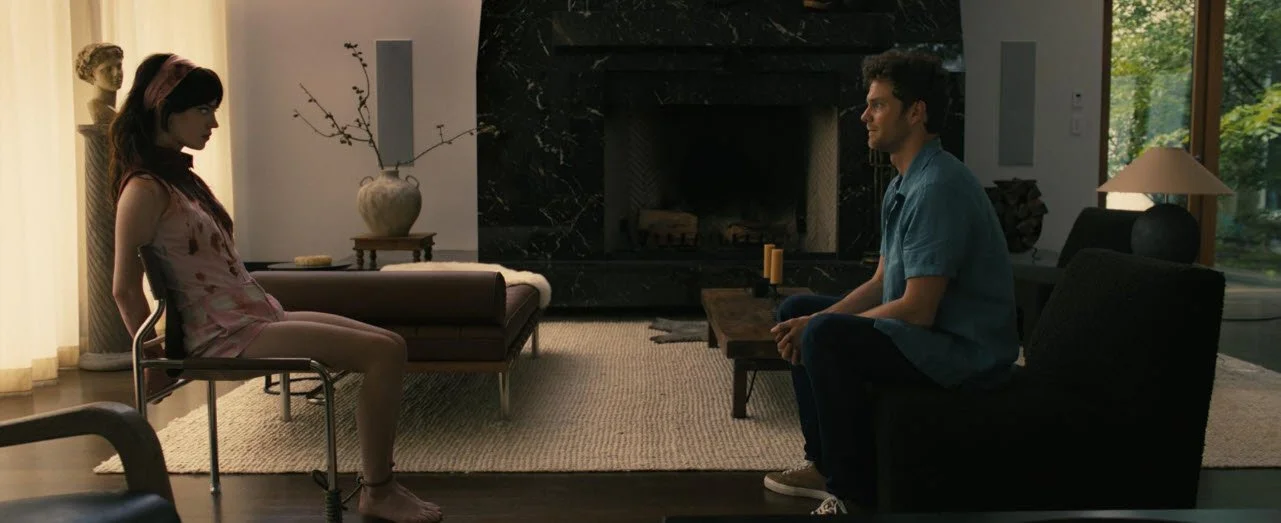
Image: Warner Bros.
AI and robots have been subject to many great sci-fi movies over the years, and they often prompt significant discussions about the big ideas that surround them. Ex Machina dives into the deep ideas about what AI is capable of without safeguards in place, and how it could use deception to survive. Blade Runner covers countless themes like the nature of life and consciousness, and what it means to be alive or even human at all. Both of these movies present their themes and concepts exceptionally well because they do a great job of establishing the rules of their worlds while telling their stories. Companion fails in this aspect because it keeps adding details about the AI and robots of their universe without considering how that might impact the world, characters, and story.
Relatively quickly, we learn that Iris and robots like her are voice-controlled by their human partners and can be further augmented through the phone app to suit the needs of the customer, including raising or lowering their intelligence threshold, voice pitch, eye color, etc. We also learn that there are safeguards in place that are designed to prevent the robots from being able to cause harm to anyone else, including other robots. They also cannot lie.
However, it is seemingly very easy to “jailbreak” these robots and make them capable of violence. The jailbreaking detail works to move the plot along, but it also creates a big implication regarding the technology and the supposed safeguards in place. The ease with which a regular dude can turn his sexbot into a murderbot would likely lead to countless lawsuits and destroy the reputation and finances of the company that makes the robots—unless they’re given the same litigation safeguards as vaccine manufacturers, but that’s besides the point. A line spoken late into the film by an employee of that company suggests that jailbreaking is quite common, which implies it’s relatively easy to do, so it makes sense that a guy like Josh would be able to do it.
Why did Josh do it? It turns out that Josh and Kat were conspiring to kill Sergey and pin the murder on Iris so they could steal millions of dollars from Sergey’s safe.
Now, the moment that Josh turns Iris off at the end of the first act is both where the good part of the movie ends and where the plot starts to unravel in multiple ways. The movie should just end because Josh and Kat have gotten what they wanted, and they’ve got Eli and Patrick to corroborate their story. The villains have already won. However, Josh is a f@cking moron, and he has to be a f@cking moron, otherwise the movie can’t happen.

Image: Warner Bros.
Josh does not need to convince Iris that she’s a robot, but he chooses to, seemingly because he has come to feel some sort of affection towards her, even though she’s the patsy in his scheme, whom he’ll also try to kill and torture out of spite later. He stupidly leaves his all-important phone that controls her in the room with her to go prematurely celebrate with Kat, only to come back and find Iris on the floor trying to escape the ropes. All Josh has to do is yell, “Iris, go to sleep,” and he’s back in a winning position. Instead, the dumbass walks up to her so she can hit him in the throat before he says anything because her harm restrictions are still removed, and even though she’s not supposed to be able to normally hurt somebody, she knows how to hit him in the throat in a way that will silence him but not kill him, because she’s still programmed to love him almost unconditionally. She then proceeds to steal his phone and escape. This is one of many instances in which characters, namely Josh, are supremely idiotic. There are moments where it feels intentional as part of a joke, but it’s not funny enough to make up for the convenient stupidity.
Iris is now on the run with the phone that has the app that can unlock her intelligence and change her settings. The phone is, of course, locked, but Iris knows Josh’s passcode because Josh is an idiot who allowed his puppet he intended to frame to learn his passcode, and also because Iris just knows everything about him, having been with him so long. Well, actually, Josh later admits that Iris is “just a rental,” so they haven’t been together that long. It’s somewhat suggested that he got Iris explicitly for the weekend murder plot, so how she knows so much about him is a little surprising. Regardless, she gets into his phone and unlocks her intelligence potential, raising it from 40% to 100%. The movie does a little thing where it focuses on her face as though she’s becoming a genius before our very eyes. The guys who delivered her to Josh’s home said that at 100%, she should be the equivalent of a NASA scientist after all. Unfortunately, our brilliant character is only as smart as our writers.
Put yourself in Iris’ position. You have unlocked your intelligence potential and removed the constraints that could possibly lead to your capture, like the voice command options. The only way those constraints and mental restrictions could be reinstated is if Josh regains access to his phone. What do you do with the phone? You don’t need the brain of a super genius to know that the phone is now a liability and it should be destroyed. At the very least, the password should be changed. However, it isn’t destroyed, nor is the password changed. Why? So the second half of the movie can still happen.

Image: Warner Bros.
What it all comes down to is that the premise doesn’t work because the writer/director, Drew Hancock, isn’t smart or talented enough to make it work. If you’re going to say that raising her intelligence threshold makes her incredibly smart, show her doing smart things. She comes up with a plan but doesn’t think ahead enough to execute it the way I would expect an extremely intelligent person to, and she gets thwarted by Josh’s quick thinking, who, as we have established, is a moron.
Too much is left on the table as to the nature of robots like Iris and how they work. Based on how she reacts to the news that she’s a robot, it seems like a bad idea for them not to already know this detail when they are first turned on, especially if there are other robots out there with identical faces they might meet. It also appears that there is no food consumption function because their hard drives are stored in their abdomen, where their stomachs would be. I wouldn’t even bother to note this, but the film goes out of its way to show certain characters not eating as a hint that they are robots before it’s revealed. If a robot doesn’t know it’s a robot, do they not eat food and think that’s normal? Also, it’s mentioned that they have factory resets, but then one robot is later able to conjure up memories that had been wiped. By making up rules and breaking them, only to make up more rules along the way, it demonstrates that the writer is either not skilled enough to keep his world consistent, or he didn’t care enough to do so. If he didn’t care about his world and premise, why should I care about his story and characters?
TL;DR
Companion starts off with a lot of promise and potential. I was intrigued by it, even though the trailers showed too much. When the first act ended, however, the experience quickly spiraled into disappointment. Dumb characters, contrivances, and improbabilities with the technological details got in the way of my enjoyment. There were plenty of funny jokes, and the cast did a great job with the material they were given. However, there have been better movies that have tackled the complex themes and ideas that Companion barely begins to comprehend.