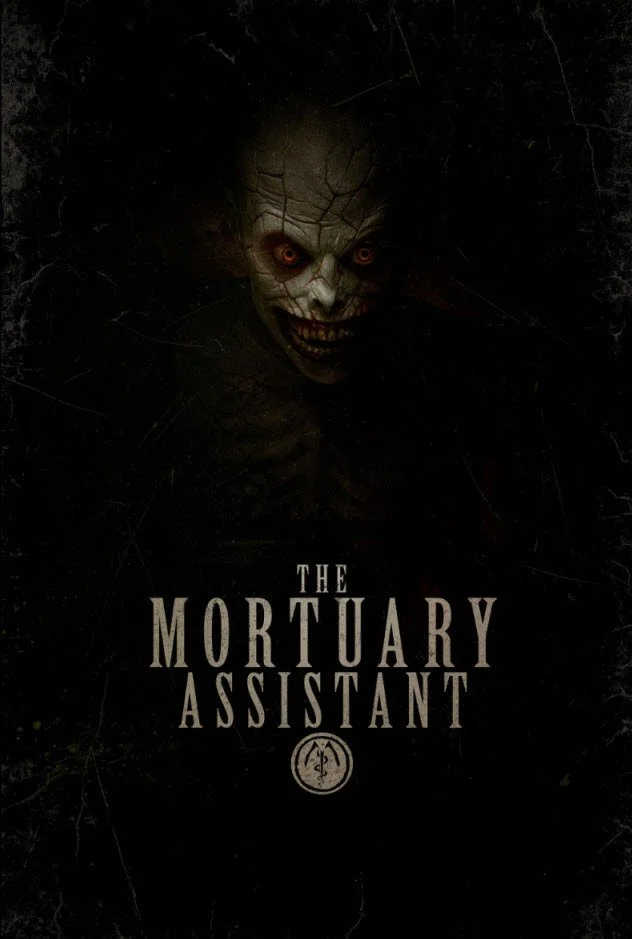
The Mortuary Assistant (2026) | Mostly Faithful, Mostly Dull
There are plenty of horror games I have watched YouTubers play, but there aren’t many that I felt compelled to pick up and play myself. One of those exceptions is The Mortuary Assistant. It’s a game that blew up in popularity a few years ago, and for good reason. It had a solid core mechanic that required you to solve a puzzle while performing the tasks of preparing bodies for burial, and there would be the occasional scary thing that would happen. Many of the scares were random, as were the puzzle pieces you would find, ensuring that no single playthrough would be the same. With multiple endings and a deeper, darker story to uncover, there was a surprising amount of depth to the experience of a simple indie game. As with anything that becomes popular, of course, a movie was made to capitalize on the brand.
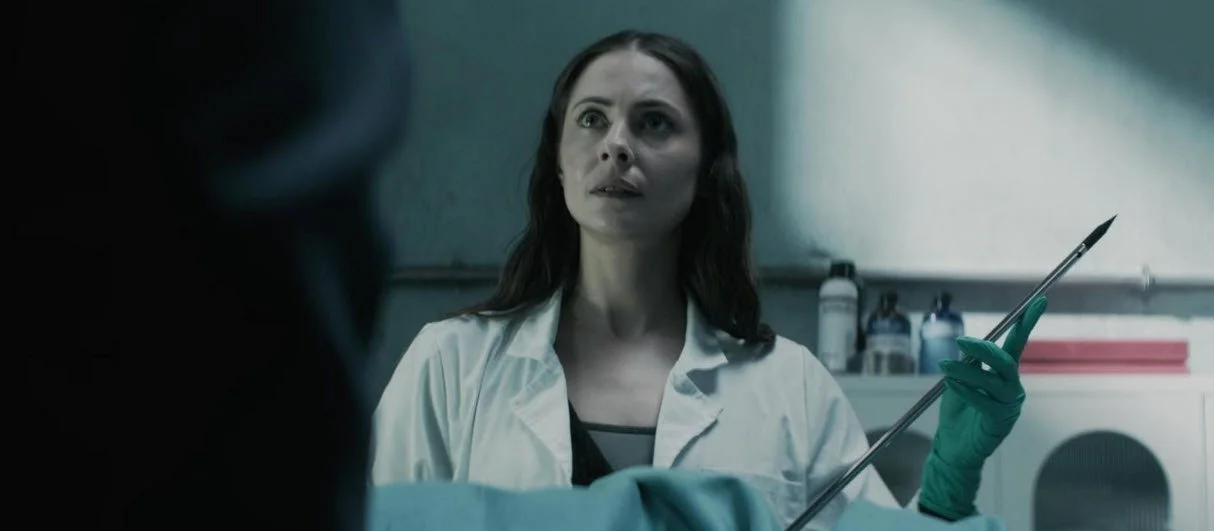
Image: Shudder
Pros
Only 91 minutes long
The actors do a decent job
The characters are depicted in a way that is mostly faithful to the game
Cons
Some unnecessary changes to the story and how it’s told overcomplicate things
The lighting, cinematography, and editing take away all the atmosphere
Weak scares and poor use of the white demon
Plot & Thoughts
Rebecca (Willa Holland) is a recovering drug addict who has gotten the chance at a new job as a mortuary assistant. Her mentor, Raymond (Paul Sparks), runs her through the process and reviews her performance as part of a final test before she gets the job. She’s a little self-conscious and worried about how she’s doing and misreads a few of his comments during the review, partially because of how stern he seems to be, but she passes, nonetheless. During the evening, he calls her saying that something has come up and he needs her to prepare some bodies at the mortuary for him while he takes care of some personal matters. As she begins working, Rebecca starts to hear and see things that might not be there. Soon enough, she learns that there are some dark forces at work, seeking to possess her before the night is over, and she has to follow Raymond’s advice on how to combat the evil.
From a high-level perspective, The Mortuary Assistant can be regarded as a mostly faithful adaptation of the video game. It doesn’t change much about the core story and is sure to include the mechanics involved in fighting off the demonic possession. The character of Raymond is played particularly well by Paul Sparks. He is not only dressed and made up to look like the character from the game, but he also has a similar voice and mannerisms in his speech that make him practically identical. The acting of the cast as a whole is all pretty good, but Sparks is definitely doing some heavy lifting to help sell the faithfulness of the adaptation.
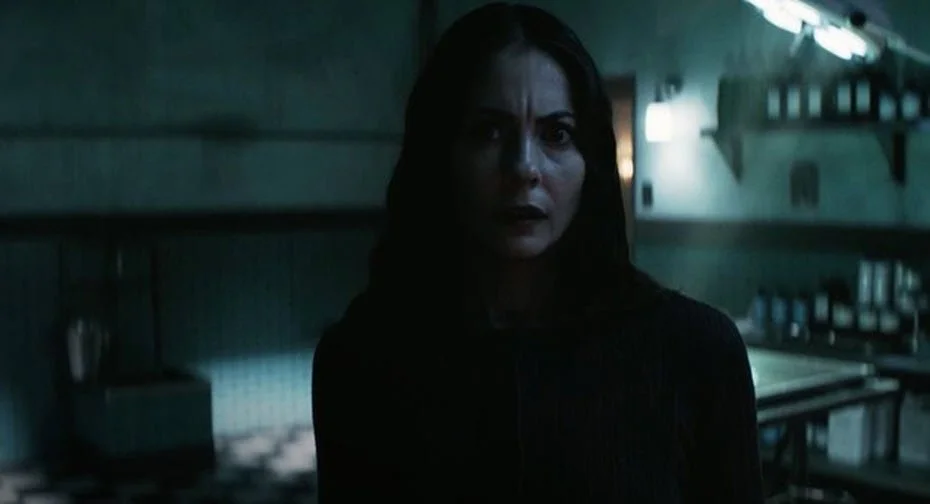
Image: Shudder
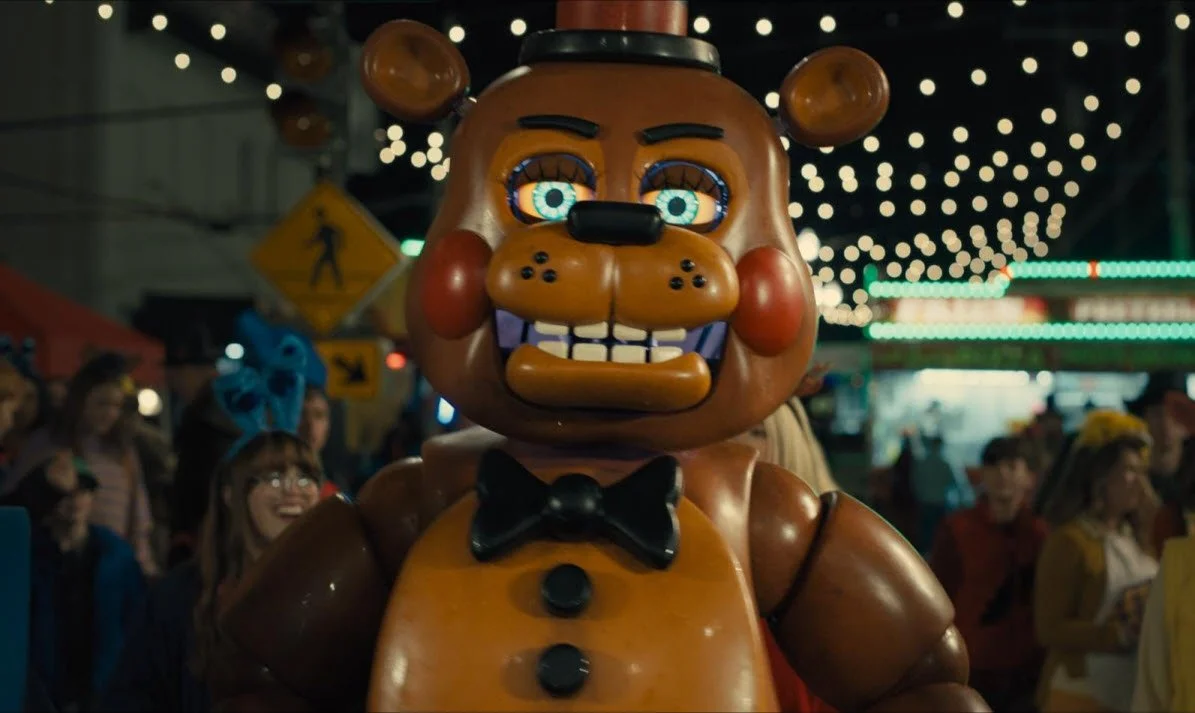
However, faithfulness is not enough to make a movie good. It can be enough to make fans of the original product happy, but it’s not enough to necessarily get the unaware audiences to like it. For instance, the first Five Nights at Freddy’s movie did extremely well, financially, and fans seemed happy with it, even though I thought it was awful and lacked interesting characters or a plot. Unlike that movie and game, I am familiar with the source material for The Mortuary Assistant, so I get the references, but I still think the movie’s not very good. It’s a shame, because I wanted to like it more, and I wouldn’t go so far as to say that it’s a bad movie, but it’s certainly not great. The main issues I have with it are some changes made to how the story is told and the absolute failure to create atmosphere.
When it comes to the changes, they’re relatively small on paper, but their ramifications are that they make it take longer for the plot to get going. For instance, in the game, Rebecca arrives at the office in the evening and is then quickly told by Raymond over the phone that a demon has latched onto her and that she needs to review the tapes in his office to become familiar with everything that is happening. She, of course, doesn’t believe this at first, but when she tries to leave, the demon takes brief control and convinces her to stay as a narrative method of keeping her and the player there. In the film, he doesn’t explain things to her right away, even though it’s clear that he suspects she might be in danger. In fact, she ends up going home after a few spooky things happen, and he’s shocked to learn that she did so, almost accosting her for it, as if she would know any better. After a few scenes involving her being briefly possessed, he then starts to explain things to her, which he does in person at first, but then is forced to do so over the phone. So now, it takes longer for her to learn the same things that were more quickly done in the game, and it’s a lot clunkier in the process. Why make the change? I assume it was mostly just to pad out the runtime with some extra scenes, with Rebecca being possessed and potentially harming people. Unfortunately, what’s added doesn’t work well due to how this movie looks.
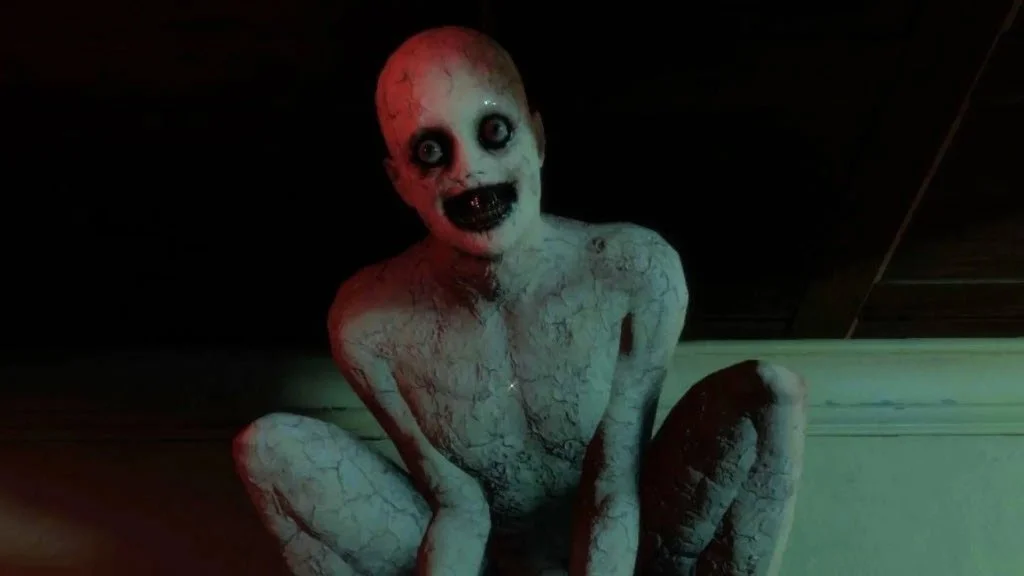
Image: Shudder
I don’t know what the goals were in terms of how to film The Mortuary Assistant, but the first suggestion I would make to improve it is to actually make things dark. Everything is too well-lit, weakening the atmosphere. The way many shots are framed makes you assume that something might appear in the background, but it rarely does, if at all. I don’t understand the point of having so many instances in which it looks like something might happen, but never does. I believe that less is more in horror movies and that you shouldn’t overdo it, but this was an example where I kept waiting for something scary to happen, and it never did. Instead, we had awkward jump cuts to the white demon character from the game, who isn’t even in the same room as Rebecca sometimes when we jump to him. These odd choices just lead to a relatively dull experience.
TL;DR
While I will defend The Mortuary Assistant as a mostly faithful adaptation of the video game in terms of getting certain characters and mechanics right, I cannot recommend it. The film struggles to create a real atmosphere comparable to the game’s experience of slow-building tension and creeping paranoia. It’s only 91 minutes long, and it has some things going for it that make it a watchable movie, just not one I would watch more than once.