Spider-Man: Homecoming (2017) | A Fresh Take On the Wall Crawler
The addition of Spider-Man to the MCU was a bit of a surprise to everyone when it happened in Captain America: Civil War. During the late ‘90s and early 2000s, Marvel was not in the best financial state and sold off the rights to a lot of their properties. X-Men and the Fantastic Four went to Fox, while Spider-Man went to Sony. Marvel Studios couldn’t make Captain America: Civil War more like the comics due to these rights issues, so the filmmakers had to get creative with the story they wanted to tell by tying things into previous films as well as introducing Black Panther in case Spider-Man wouldn’t be able to join the fray. I think we all lucked out with what was accomplished because Civil War ended up being a great movie, Black Panther was a great character in it, and Spider-Man still showed up.
But what about having his own movie in the MCU? It had been only a few years since the last set of Amazing Spider-Man movies came out. How were they going to make this Peter Parker stand out from the others who came before him, and what sort of story would you tell about the famous web-slinger in a world where the Avengers have saved the earth from an alien invasion and an apocalyptic AI?
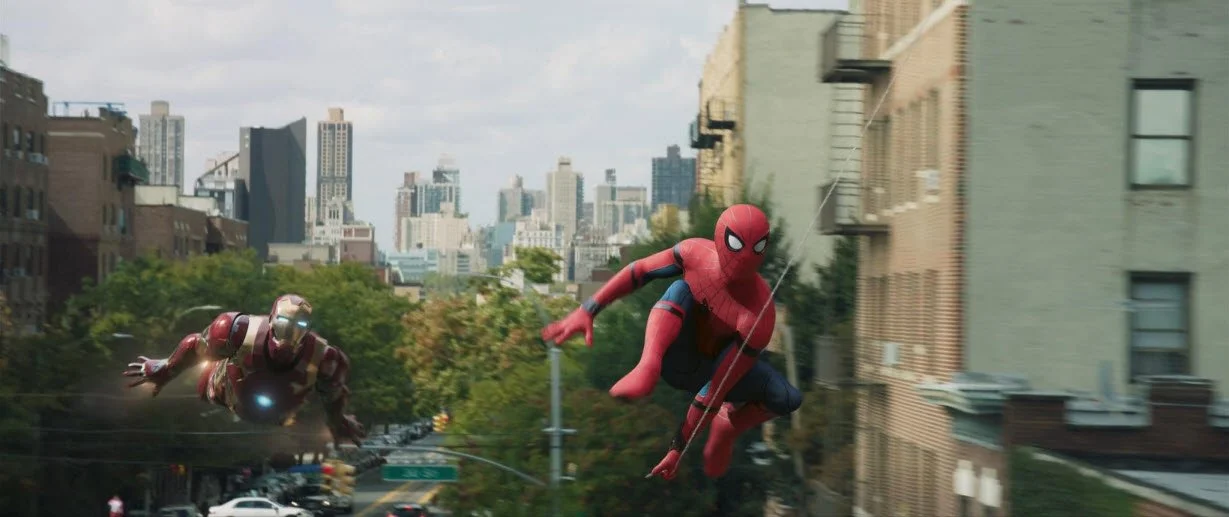
Image: Marvel Studios
Pros
Satisfying heroic moments of Spider-Man saving people
Great acting from the cast
An interesting villain
Interesting dynamics between Peter and other characters as a younger version of the character
Cons
“MJ” is not Mary Jane; does the stupid Moneypenny/Robin thing from Skyfall and The Dark Knight Rises
The lack of certain definitive Spider-Man characteristics is noticeable and slightly alters what the character is supposed to be
Several action scenes at night are hard to follow
Introducing characters to kill them immediately is dumb
A little too much of the Marvel humor at times
Plot & Thoughts
Peter Parker (Tom Holland) is living with his Aunt May (Marisa Tomei), attending high school, and doing his best as the fledgling Spider-Man, early in his superhero career. After helping Iron Man (Robert Downey Jr.) with the conflict in Germany between him and the other Avengers, Peter is looking for more chances to get involved with the Avengers and fight crime on Iron Man’s behalf by frequently calling Tony Stark’s buddy, Happy (John Favreau), and getting ignored. Peter struggles to juggle his responsibilities as Spider-Man and his social life with his classmates as he tries to win the affection of Liz (Laura Harrier), while also bumping up against Tony Stark’s tough and somewhat absent fatherly support. Meanwhile, some shady individuals have collected and stolen alien technology from New York after the invasion that took place in The Avengers. After Spider-Man foils a few theft attempts by them, the leader of the group, Adrian Toomes (Michael Keaton), is forced to do the biggest heist he’s ever done, and no one but Spider-Man can stop him.
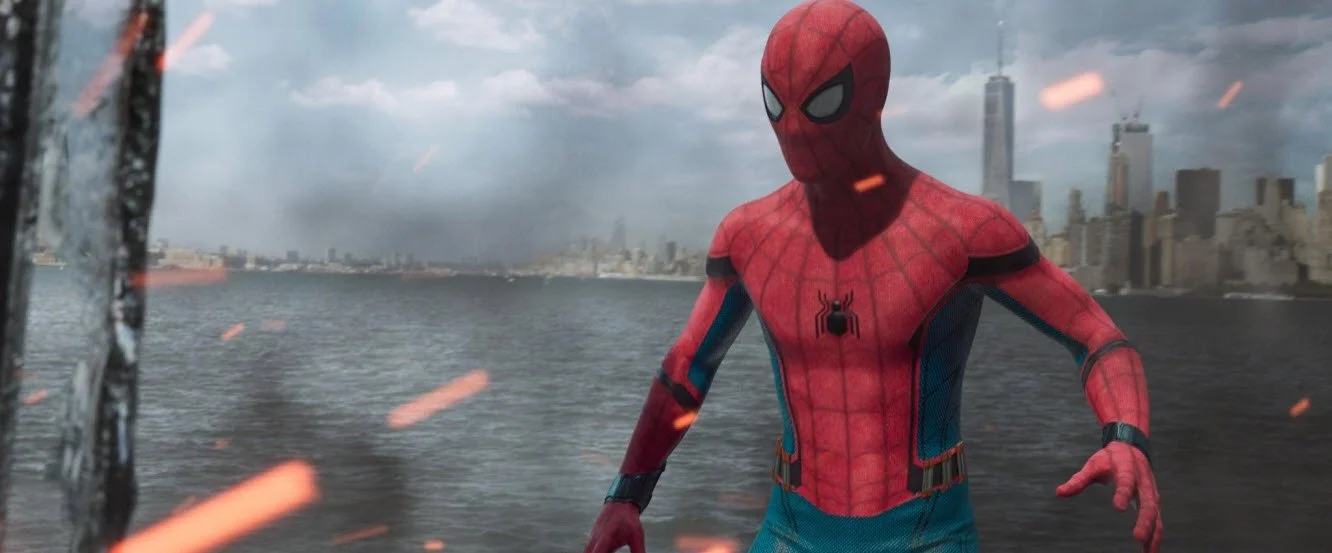
Image: Marvel Studios
Before we get into the details about Spider-Man: Homecoming, I need to acknowledge a few biases that I have that affected my overall opinion. While I no longer consider myself a Marvel fan, I still read plenty of comics as a kid and enjoyed many of the different media of Marvel entertainment, like video games and cartoons. Of all the Marvel superheroes, Spider-Man was my favorite, and I was always more invested in his stories than any other, which means I hold a lot more information in my head about his characteristics and his villains. It also colors my expectations of a Spider-Man movie; however, I try to keep an open mind about how the character is portrayed, especially when he’s gone through so many iterations already. There are several significant changes made to Peter and his situation in Homecoming that I like, even though they’re drastically different from how things are in the comics. There are other changes that, while less significant, rub me the wrong way.
Before we get to my gripes, let’s focus on the positives, starting with the villain. Adrian Toomes, aka The Vulture, is fantastically reimagined into a character that I think is far more interesting than he’s been in the comics. I love the idea that he’s a guy who started out doing an honest living, but was spurned by the bureaucracy of S.H.I.E.L.D. during the cleanup of New York City after the alien invasion that he and his crew of loyal workmates decided to scavenge and salvage the alien technology to help fund and enable their illegal activities. Toomes turns to a life of crime almost out of necessity, forced to scavenge like the bird he emulates, but he and his crew manage to become rather successful thieves, especially with the powers of his flying suit.

Image: Marvel Studios
What makes Toomes more interesting comes in the final act, when we learn that he’s committing these crimes to earn enough money to support his family. There are several good moments that demonstrate his loyalty to his family and how he is willing to do anything for them, due in no small part to Michael Keaton’s acting. The scene in the car in which Toomes figures out that Peter Parker is Spider-Man is tense and engaging because Keaton is able to express his thoughts subtly with his face, and then he drops some great lines that further enforce who the character is. This version of the Vulture felt just as meaningfully assembled as the better villains in the Sam Raimi trilogy (Green Goblin, Doctor Octopus, Sandman).
I also like Tom Holland’s Peter Parker and his dynamics with other characters. Spider-Man is typically a lone hero who doesn’t join other teams. He’s a hero who does his best to keep his neighborhood safe and help people in need, but he is also focused on the people who are important to him, like Aunt May, Mary-Jane Watson, or Harry Osborn, and he does his best to avoid putting them at risk. This tendency for Peter to be on his own often puts him in situations of immense pressure and struggle—some are just the problems of regular people, like struggling to make rent payments, which is what makes Spider-Man such an endearing hero to many fans.
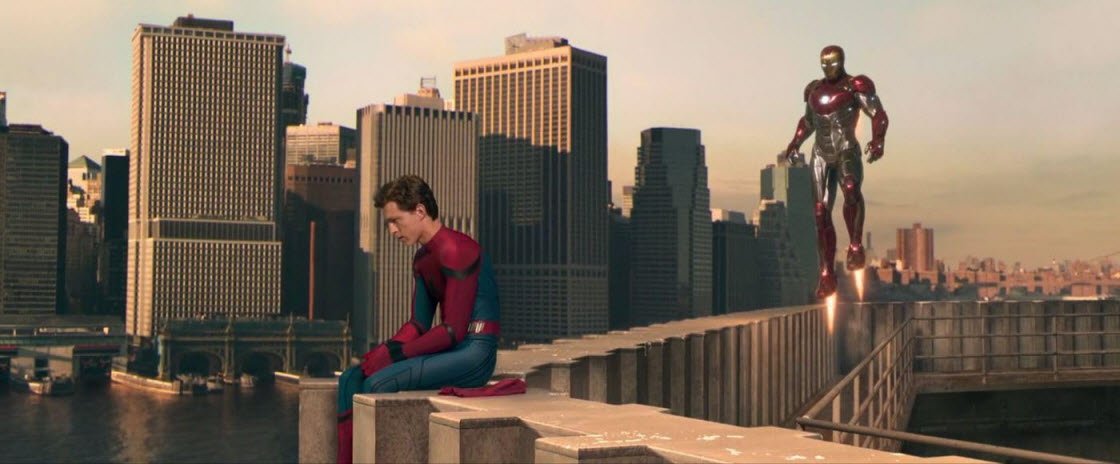
Image: Marvel Studios
With Homecoming, a lot of changes are made to this dynamic by making Peter younger and more impressionable. Normally, Peter Parker is out of high school and on his own by the time he has become Spider-Man, but this time, he’s still a teenager and dealing with all the trials and tribulations of school and social awkwardness. As a young man who is still learning the process of being a hero, he looks up to the Avengers, especially Tony Stark. While Uncle Ben is never mentioned in this movie (possibly because of copyright issues), his absence is still represented by Peter’s apparent desire for a father figure in his life, and Stark fits the surrogate role in many ways.
Even though it breaks with the character's traditional identity, I like the decision to make Tony Stark a character for Peter to look up to. His connection to Stark and desire to be in the cool-kids club with him generate a fair amount of comedy as well as complexity with their relationship. It creates an interesting arc for a young hero like Peter to go through in the story. He starts out idolizing the Avengers and wanting to be a hero for immature reasons like fame and adoration, and through some tough love from Tony, learns that he should be a hero to help people because that’s what a hero does. There’s a downside to this that I have to point out, however. All of this would be more sufficiently summed up by the missing speech from Uncle Ben in which he says, “With great power comes great responsibility.”

Image: Marvel Studios
The lack of Uncle Ben’s influence and that line in particular is felt in this movie for those of us familiar with Spider-Man outside the MCU. There’s a reason that phrase was repeated in almost every episode of the Saturday-morning cartoon show in the ‘90s. It is intrinsic to the character of Peter Parker and who he is as a hero. The Raimi movie got it right by establishing not only that it’s a phrase that is meaningful to the character to the point that it efficiently summarizes who Peter Parker wants to be as Spider-Man, but it also showcased the price of that lesson in how he failed to stop the guy who inevitably killed Ben due to his ignorant indifference at the time. Peter feels immense guilt over failing to be responsible in the moment that cost him his uncle. Later on in the comics, he loses more people close to him—sometimes due to his own actions—and these incidents make him a more complex and endearing hero as a result. The fact that there is no reference to Uncle Ben and his famous line in Homecoming is not irredeemable, as I think that the surrogate father relationship with Tony Stark is still interesting, but it’s not a change that I necessarily love. If you think I’m too lost in the weeds of nerdiness and want me to just get over it, can you imagine a Batman or Harry Potter in which his parents weren’t actually murdered as a kid? I give this a pass here because we still get an interesting story to tell, but it’s essentially changing the core of the character in the process.
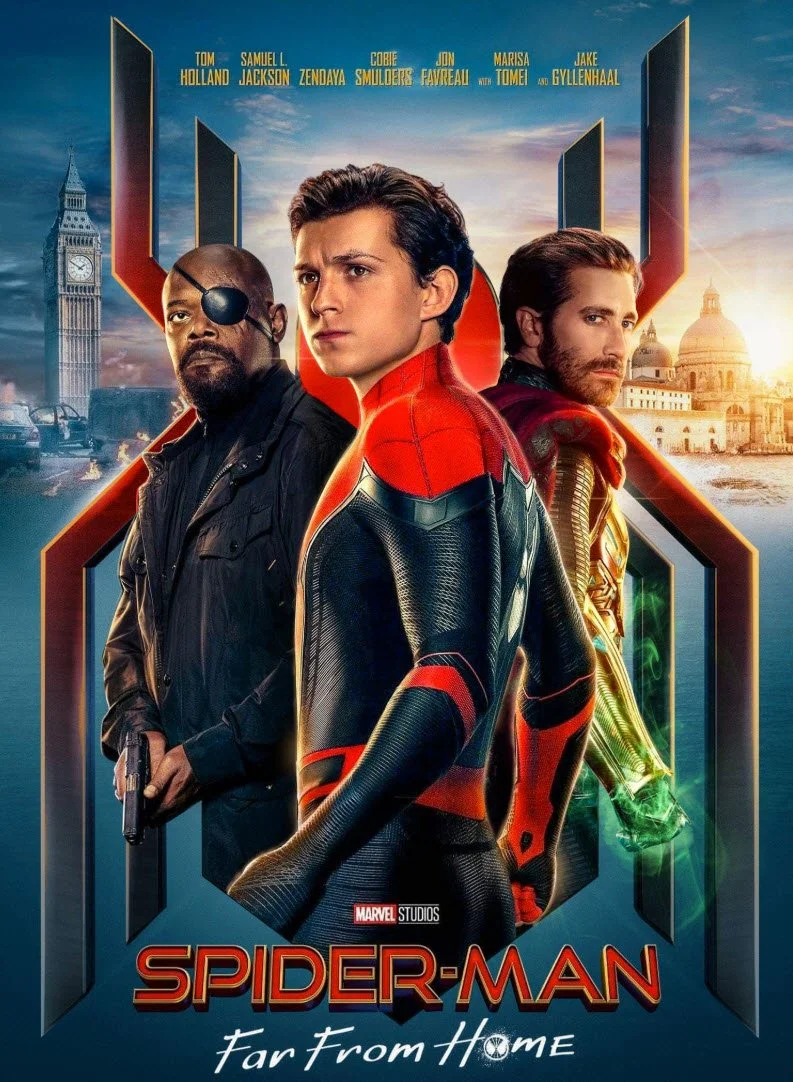
A change that I do not accept at all, however, is MJ. The character’s name is Michelle (Zendaya), but at the end of the movie, she reintroduces herself as MJ. MJ, as Peter would often call her in comics and everything else, stood for Mary-Jane, the sexy redhead who called Peter “Tiger” and who was only ever afraid of one of Spider-Man’s villains. So, we’re replacing Mary-Jane Watson, the girl whom Peter eventually marries, with a different character…who looks nothing like her and has the same initials…why? I have some theories, but it seems like this is yet another instance in which a redheaded character is replaced by someone a little more appropriate for “modern audiences.” Well, at least she can act, right? Nope. Her acting inadequacies are far more prominent in Spider-Man: Far From Home, but my opinion of her performance was not improved by my bias against her for playing a replacement character of someone so important to Spider-Man. Calling her MJ is like cowardly, fake fan service of trying to make average people recognize the name of a character that Peter Parker knows without fully committing to the fact that they’re completely changing the character and pissing off people like me who know better. It only further irritated me that when she tells Peter her nickname is MJ, it’s done at the end of the movie in similar fashion to how Moneypenny revealed her name to James Bond in Skyfall or how the audience is told that Joseph Gordon-Levitt’s character in The Dark Knight Rises was Robin, as though that supposed to make me gasp and giggle with excitement.
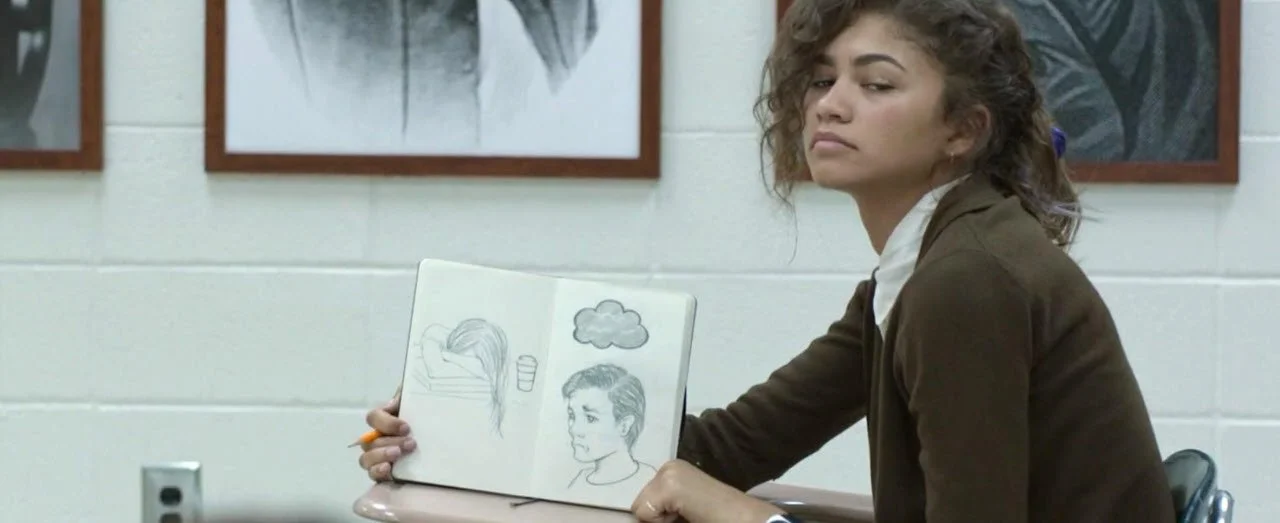
Image: Marvel Studios
Nerdy references aside, I still like Homecoming. Some of the action scenes are too dark to see, but the brightly lit scenes with Spider-Man doing superhero things are pretty fun. I think Tom Holland does a great job as Peter Parker, and he manages to portray a young hero who is often out of his element really well. The scene in which he’s trapped under rubble is particularly effective because of Holland’s performance, as he is very convincing in his fear of dying in that moment. Likewise, you can always count on Robert Downey Jr. and Michael Keaton to bring a solid performance, which they do.
TL;DR
I’m a little biased in both directions when it comes to Spider-Man: Homecoming, due to my affection for the comics, shows, movies, and games that have come before. There are certain changes made to the character that I can forgive because the movie tells a meaningful story with them. There are other changes I don’t like at all. Nonetheless, Homecoming brings many more positives than negatives and manages to tell an interesting tale about a young person learning what it means to be a hero while juggling his teenage social life. It’s far from my favorite Spider-Man movie, but it's still a solid entry.

![Guardians of the Galaxy Vol. 2 (2017) | [Insert Joke Here]](https://images.squarespace-cdn.com/content/v1/5d39e718d8ec690001509614/1759338060066-ZFS4CKP0M7WGJ0B9UHKD/GotGV2_01a.jpg)