Mixtape | A Horrific Spotlight on Modern Storytelling & Game Design
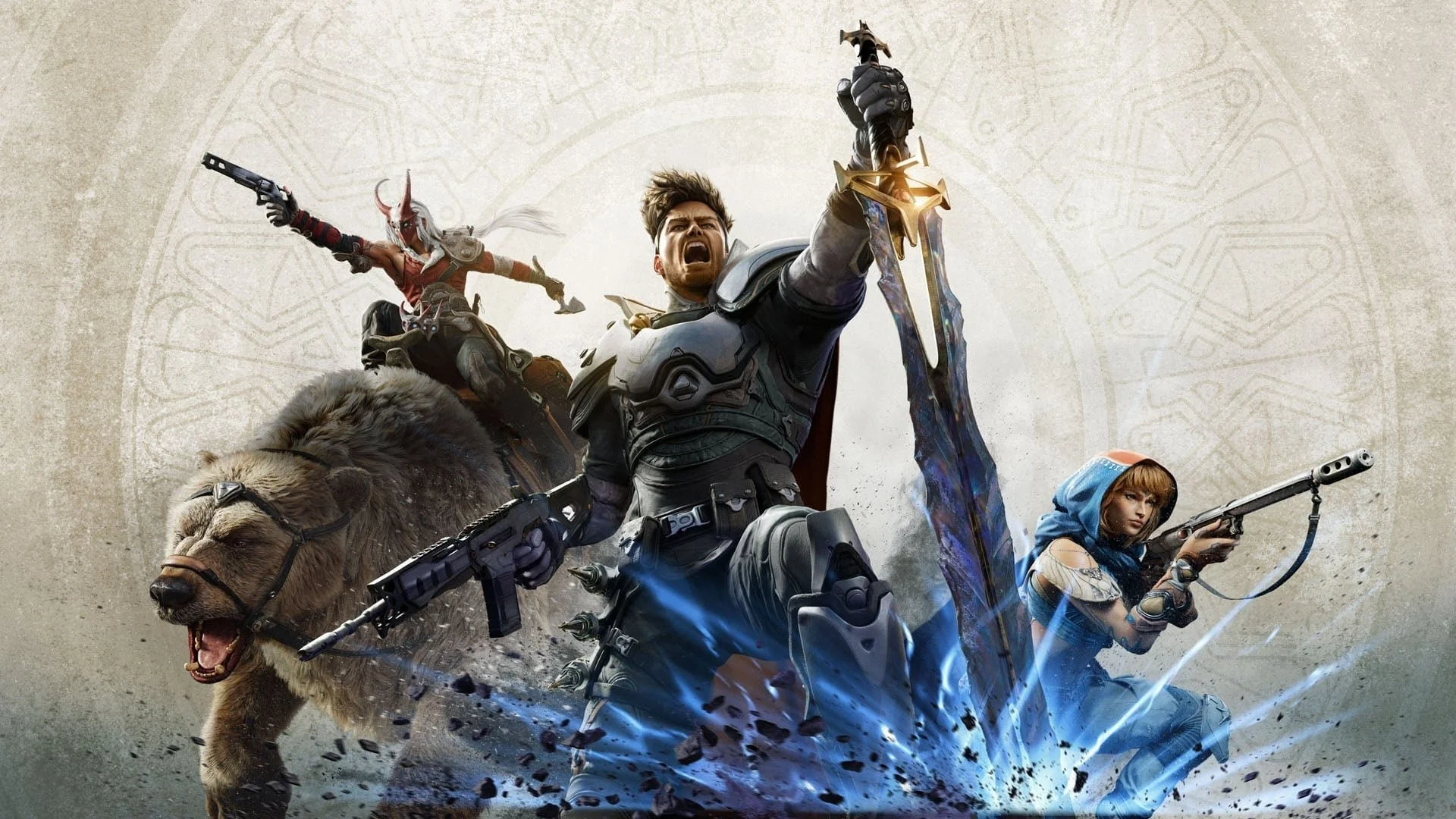
Mixtape is a small “game” that was released in May of 2026. There’s nothing significant about it on its own that would warrant the attention it got during the month of its release to stand out from the ceaseless wave of video game releases. It wasn’t advertised as much as something like a new Call of Duty. Nor was it given the Highguard treatment and presented at the Game Awards as the next big thing. However, the positive buzz it got from outlets like IGN and Gamespot brought Mixtape into the public zeitgeist.
It was getting 10/10 reviews and seemingly endless praise from other media outlets as a revelation. Had it gotten just mediocre scores or even the typical 7/10 score that IGN has become infamous for, Mixtape likely would have slipped under the radar. It was the fact that it got the highest possible score that used to be reserved for only the most incredible entries in the pantheon of video games that Mixtape became the subject of much scrutiny by the general public when streamers tried it out for themselves to see what the fuss was all about.
I have seen multiple streamers play Mixtape to its completion. It’s a rather short experience that takes less than 3 hours to complete. It’s also barely a game. There are sequences in which the player is given a minimal level of interactivity in the form of navigating an environment or pressing a few buttons in a mini-game, but a majority of the experience is listening to the dialogue of the main characters and the various licensed songs on the soundtrack. Based on what I have seen, I can say that it is a product that I wouldn’t need to “play” for myself to form an informed opinion about whether it is any good. Thus, my opinion is: Mixtape is awful. Not only is Mixtape awful, but it happens to be a perfect encapsulation of numerous problems the video game industry is facing.
A few months prior to writing this, I did a deep dive into a Comicbook.com article that made the argument that it was gamers’ fault that high-profile games have been failing, while ignoring the behavior of developers, publishers, and so-called journalists, and how they might have any responsibility over what has happened to the game industry. Prior to that, I wrote a lengthy rebuttal to a Kotaku editor’s opinion of a game (which they claimed wasn’t a review), in which they made some interesting comments about how the relationship between game journalists and game companies should operate, among other really dumb or insane things. So, I feel compelled, once again, to throw in my two cents about the industry with the attention Mixtape has gotten recently.

Mixtape is something that represents a lot of what is wrong about the industry and the relationship that the media outlets have with publishers, while also attempting to present itself as a small indie project. Very little investigating is required to learn that this couldn’t be further from the truth and that Mixtape is really just one big, dishonest piece of trash.
What is Mixtape?
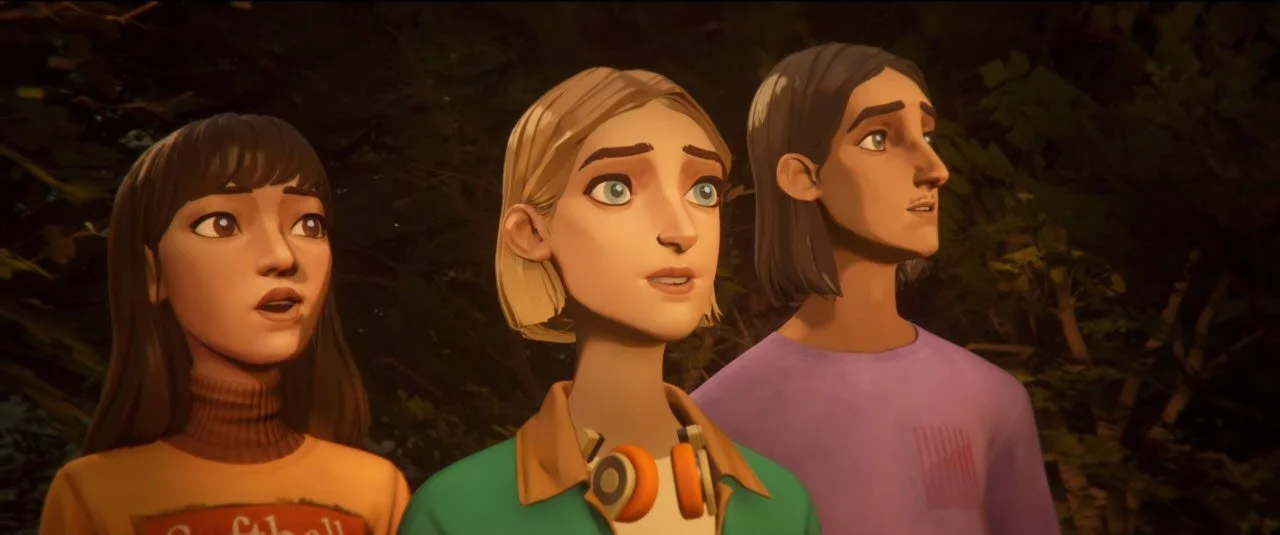
Mixtape is a short, “indie” game made by a small development group from Australia called Beethoven & Dinosaur. It’s a narrative-focused “game” that allegedly takes place in the 1990s and follows the escapades of three teenagers: Stacy, Van, and Cassandra. The three have graduated from high school, and it’s their last night together in their rural Northern Californian hometown before they go their separate ways into adulthood. They had originally planned on taking a road trip together down to Los Angeles, where Cassandra was going to attend college; however, Stacy’s ambitions to become a music supervisor made her buy a plane ticket to New York so she could stalk and casually run into an important individual in the music industry to become her protoge. Stacy’s decision to go to New York instead of joining the road trip they had been planning for years has caused a slight rift in her friendship with Cassandra. Cassandra also appears to be dealing with some issues at home with her “overbearing” parents, who believe she’s hanging out with the wrong crowd.
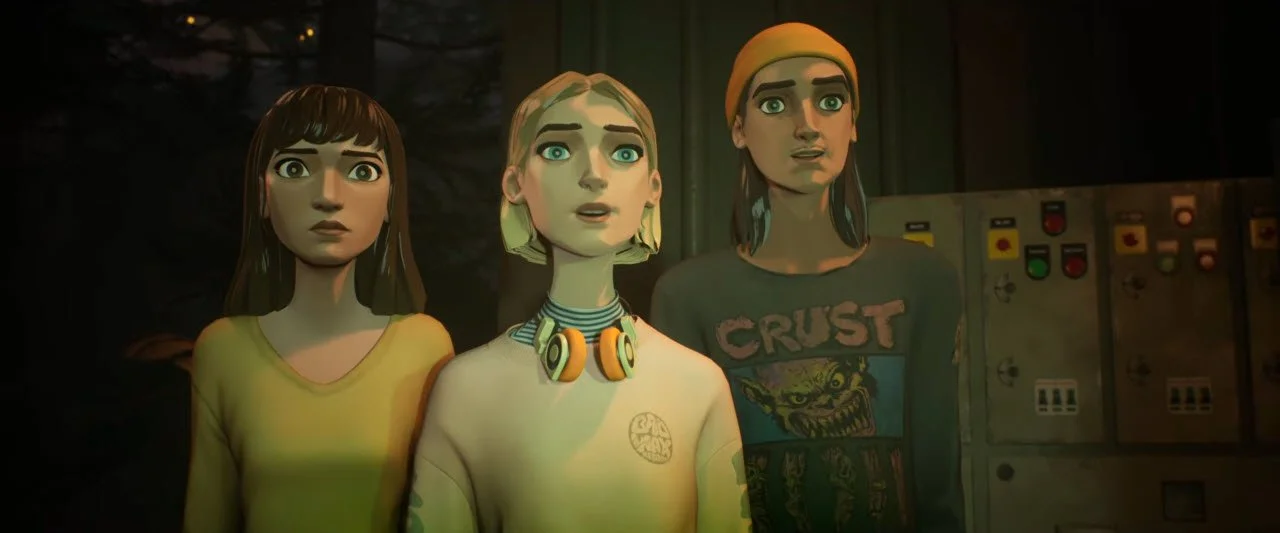
Image: Annapurna Interactive
The three casually reminisce about their past “achievements” together while they hunt for booze to bring to a big party that is being thrown by someone they think is cool. Throughout the game, Stacy frequently breaks the fourth wall to inform the player of random, useless facts about the songs that she’s chosen for her playlist of her last day with her friends. Via various button prompts and minigames that arise throughout the experience, Stacy divulges more facts about herself and her friends, and the game frequently cuts away to a moment in the past, as though the nostalgic game that takes place in the ‘90s was nostalgic for something else within its own world.
As the name might suggest, the main focus of Mixtape is the music that plays throughout the game. Stacy often brings attention to the song that is playing, but it’s also clear, if you watch anyone play the game without the music on, how each sequence of events or memories the trio experiences revolves around the song that is supposed to be playing in that scene. If you were to choose to mute the music while playing Mixtape, the importance of the songs and how they’re utilized in each sequence becomes that much more obvious, with some sections seemingly going on for much longer simply because it’s supposed to match the length of the song.
Why is Mixtape so Controversial?
The controversy stems from the overwhelmingly positive attention Mixtape has gotten from the legacy media websites that review video games, such as IGN. Had Mixtape gotten a 5/10 or lower, no one would have batted an eye at it or cared that a small game without much gameplay was getting raked by games journalists. It’s the perfect score that raised a lot of eyebrows. Whenever you give a score that high for anything, it makes people wonder what it did to deserve the praise and often draws comparisons to other great pieces of entertainment. When you see Mixtape in action, however, it becomes very difficult to accept that score as an honest opinion of something that claims to be a video game. Spending just a few hours with it reveals not only that it’s undeserving of its praise and score, but that its creators are inept storytellers who don’t seem to understand basic fundamentals about adolescence and adulthood, or the law, for that matter.
Mixtape has Awful Characters
The characters in Mixtape range from pathetic to insufferable. It’s a race to the bottom for whom I hate most in the main trio.
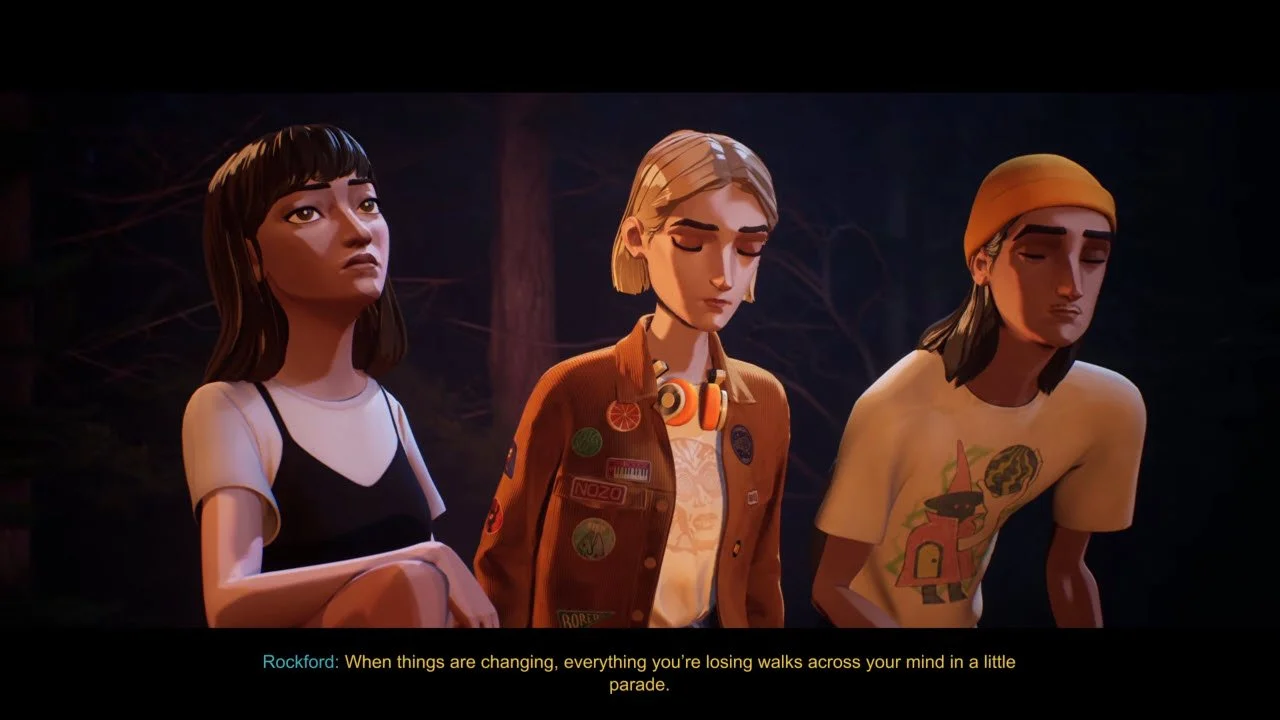
Image: Annapurna Interactive
Van Slater, while very annoying with his assinine comments and skater-bro vernacular, is probably the most tolerable due to his being the person with the least personality of the three. The other two are far more volatile, while he is just there as something of a third wheel to validate their behavior. He’s just a typical stoner loser who doesn’t have any strong morals or opinions that are based on anything grounded or real. He mostly just makes vague “philosophical” comments about things to sound smarter than he is in his skater-bro voice.
Of the three main characters, he is the only one who gets a minuscule amount of respect from me because his passion for music actually leads to something related to his character. While Stacy just curates music, Van has created his own songs, making him far more likely to contribute to society in some way than his friends. It’s not much to praise the brainless goof for, as it’s not like the song he’s created that we hear is any good, but it’s more than I can say for the other two, who are, well…
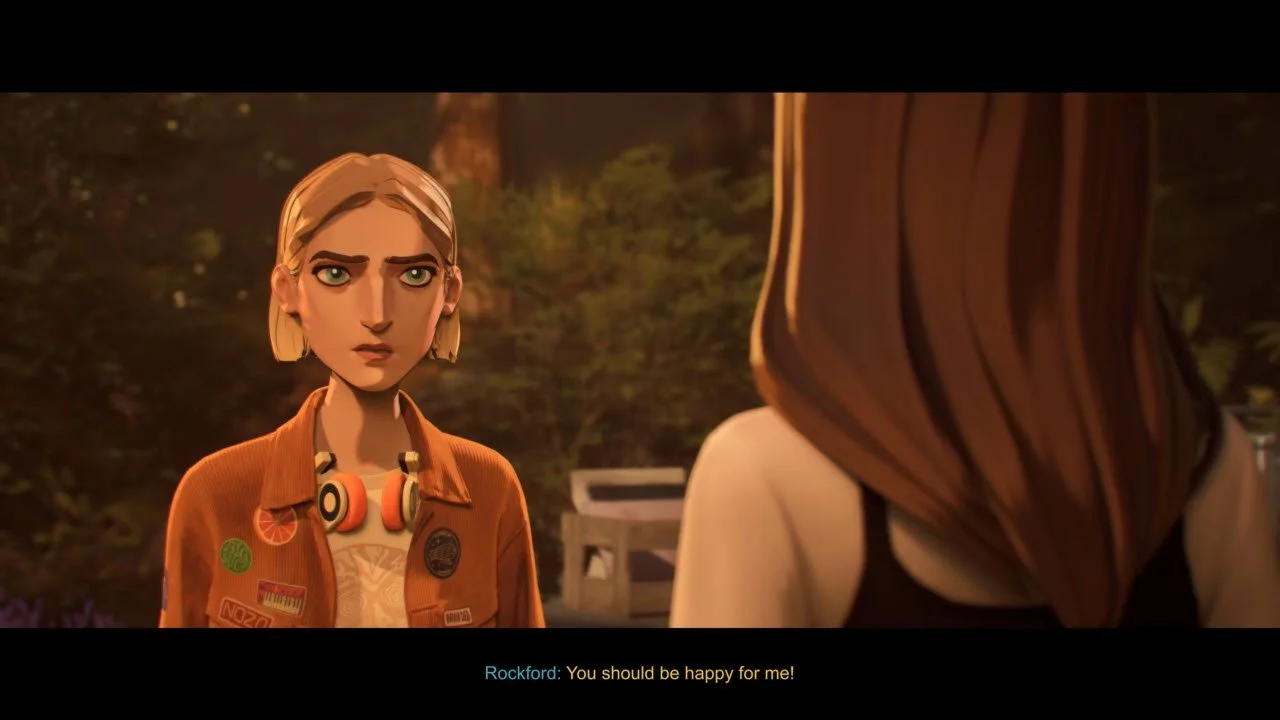
Image: Annapurna Interactive
Stacy Rockford is an egotistical narcissist who oozes with pretentious arrogance. Cassandra Morino is a self-absorbed psychopath who is determined to be a bad person because she thinks that rebelling against and disappointing her parents is cool. Each of the girls have their moments in which one comes across as worse than the other. Stacy is the narrator of the story and the one who drives the plot, but she doesn’t really have a character arc. Cassandra has more of an arc throughout the story, even though it’s not a good one. The story ends briefly after Cassandra’s big “moment” where her arc concludes, but we’ll start with Stacy and why she’s so awful.
The game opens with Stacy immediately breaking the fourth wall and describing the power of the compact disc and how great it sounds—even though the game is called Mixtape, and not Mixdisc. Before there are any pieces of shared dialogue, Stacy establishes her insufferable personality with her know-it-all attitude about music and how “you won’t be listening to music, you’ll be listening to who you were.” Tossing her heart-shaped sunglasses off-screen, Stacy says, “I bet one of us dies this time,” to the musical sting in a way that would suggest that she thinks she’s cool, when everything about her is forced and fake. It’s a cringy scene that reminds me of the types of things the geeky kids at my school would do, thinking that they were being cool or authentic, while the rest thought they were just lame imitators. More moments like this happen over the course of the game, which leads me to believe the ones responsible for writing the story were probably kids who got pushed into lockers.
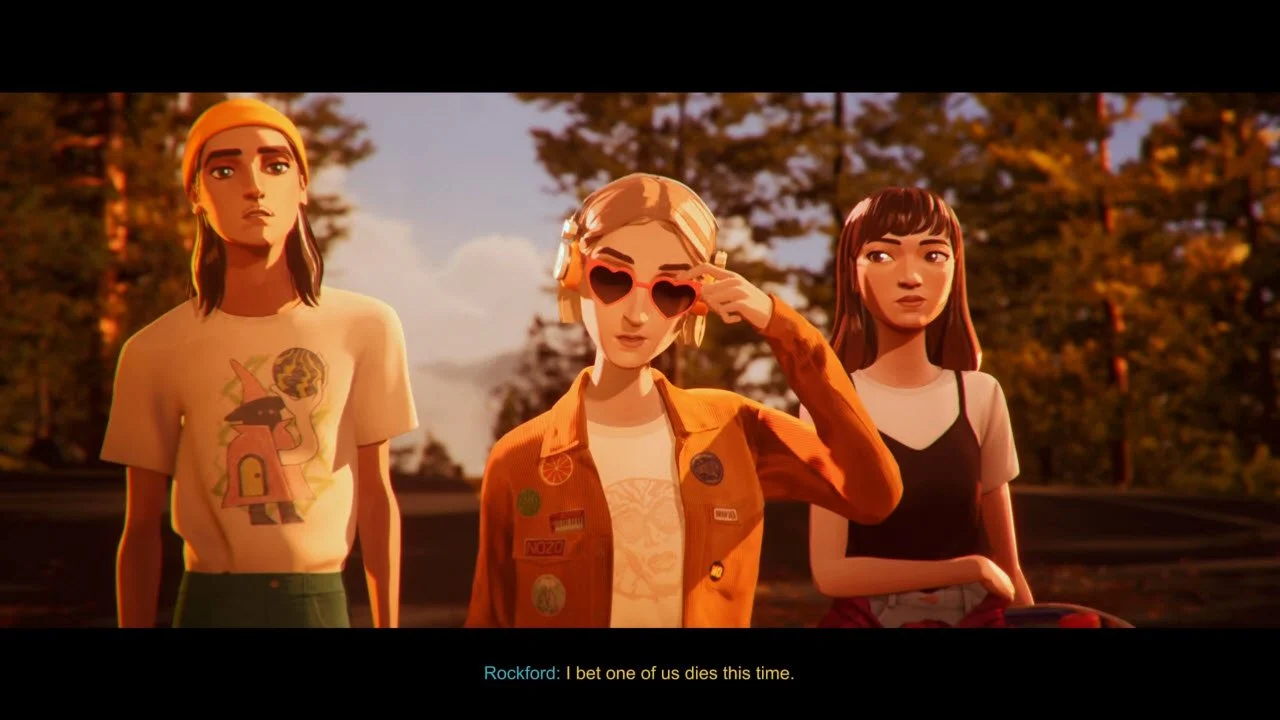
Image: Annapurna Interactive
As the game progresses, Stacy will look at the player and barf out facts about a song or music in general that feel like they were copied and pasted from a Wikipedia page. Since the story is supposed to take place in the 1990s—even though next to nothing about its tone or style fits that decade—it’s odd that a teenage rebel who revels in being a stoner failure and doesn’t likely read much would know so much about music in a decade in which the internet was not widely available to provide all the useless facts she knows. Nonetheless, having a character like Stacy who thinks she’s cool because she doesn’t play by the rules of society and knows so much about music as the main character of the story is not a great idea if you want the audience to like her. Every time she opened her mouth, I was reminded of reading Ready Player One, in which the main character constantly has to remind the reader how great he is because he knows these random facts about movies, TV shows, and video games from the ‘80s, and that people who don’t care about that stuff are lame.

Case in point, there’s a scene in Mixtape in which another character is introduced, named Jenny Goodspeed, whom Stacy hates. Why does Stacy hate Jenny? There are several moments and memories involving the character that are supposed to shed light on why, but there is only one instance in which you could potentially empathize with Stacy. In the scene she’s introduced, she says how she watched a movie but didn’t really care about the soundtrack, which was enough to make Stacy hate her. It’s one of many scenes in which Stacy comes across as worse than the people she’s criticizing; in fact, Jenny compliments everyone around her in that scene while Stacy looks on in disgust.
Another time Jenny was the subject of ire from Stacy was when Cassandra chose to hang out with her instead of Stacy and lied to her about it. A person capable of self-reflection might wonder if there was a reason why their friend would do this without blaming others, but not Stacy. The only thing that might warrant a distaste for Jenny from Stacy’s perspective is when she says that Jenny called her a fat lesbian or something in middle school—a scene we don’t see, but Cassandra confirms that Stacy insulted Jenny first—but a single insult is not enough to make audiences sympathize if everything else about the character has been relatively normal or friendly. Who are we supposed to hate, Mixtape? Is it the nice person who isn’t as passionate about music as the other characters? Or is it the person who believes the world revolves around her and her tastes?
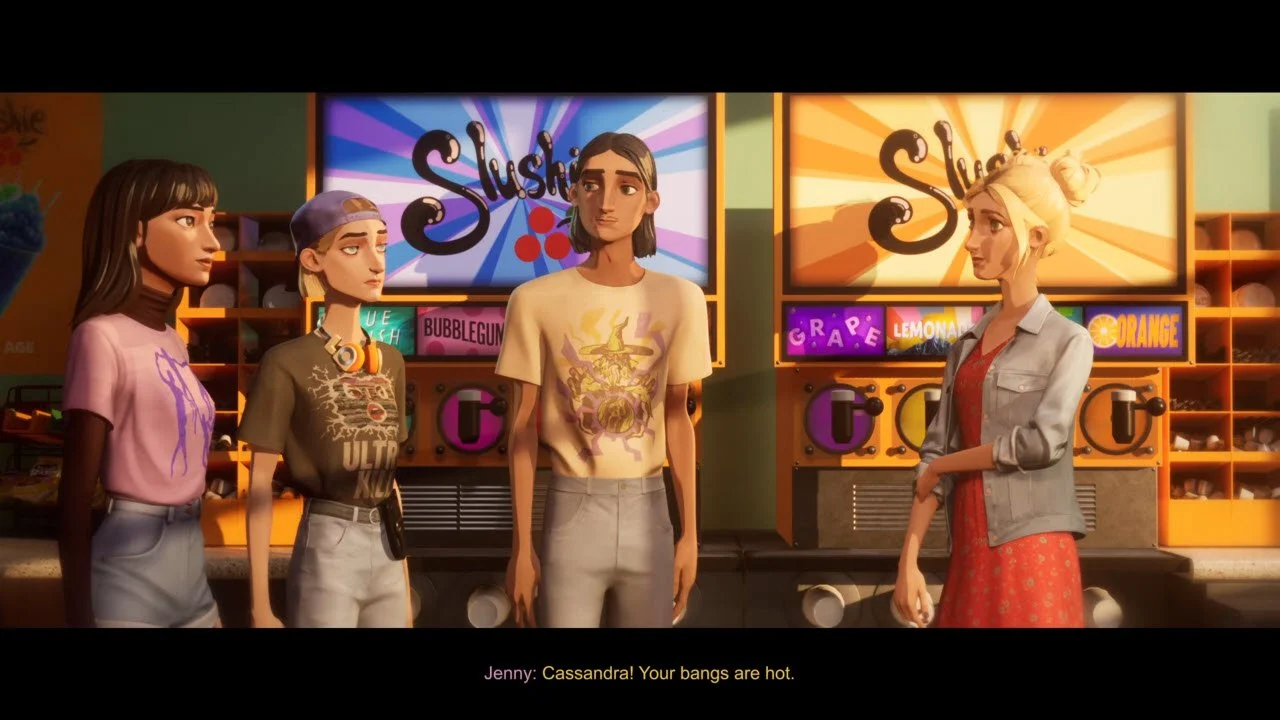
Image: Annapurna Interactive
There is a particular standout moment in which Stacy Rockford’s narcissism is on full display. Immediately after Cassandra’s father grounds her for her misbehavior and to keep her from attending the big party, Stacy pokes her head into Cassandra’s room, and the first thing she says is, “You promised you’d go to Camille Cole’s party…You PROMISED. It’ll ruin my soundtrack.” Nothing about how it sucks that her dad is punishing her—even though he should, and he is very justified in doing so. Nothing about how she sympathizes with her friend. Nothing about helping her friend sneak out or do something to appease her father. No, it’s all about Stacy and how Cassandra is ruining Stacy’s planned mixtape experience. Stacy rages outside, kicks over a trash can while she screams, and then rides on her skateboard to one of the three grunge songs featured on the soundtrack of a game that is supposed to be taking place in the 1990s, flipping off everything she can see. She’s pissed off that her life soundtrack is being altered and her plans are being ruined, throwing a teenage tantrum in the process and ensuring that nobody can sympathize with her.
Then there is Cassandra. While Stacy deserves much of the ire from the player for her arrogant pretentiousness throughout the entire game as the annoying narrator, starting from the very beginning, Cassandra reaches her own level of insufferability by the midway point. She starts out just as much in the background as Van, but in the scene in which Stacy recalls when Cassandra first started hanging out with them, with lines like “I’ve decided to disappoint my parents,” and “I want to ride a flaming steed of delinquency,” Cassandra starts to work her way up the crappy character tier list.
Cassandra is arguably the worst character because of how her dialogue reflects her goals and interests. She often refers to people and activities as “hot.” It’s not clear if that’s supposed to just be slang or if she’s actually turned on by such things. I’m assuming it’s just the writers using it as their own slang for “cool,” which was a common term in the ‘90s—The Simpsons commented on its use at some point. I don’t know why you’d invent your own slang rather than look up the slang that was more commonly used in Northern California in the 1990s if your whole game is just supposed to be a nostalgia trip. A quick Google search brought back “fly,” “phat,” “da bomb,” “fresh,” “tight,” and “rad.” I distinctly remember an overusage of “tight” and “phat” from my youth, and I still use “rad” to describe things, which I would assume skaters in this game would use.
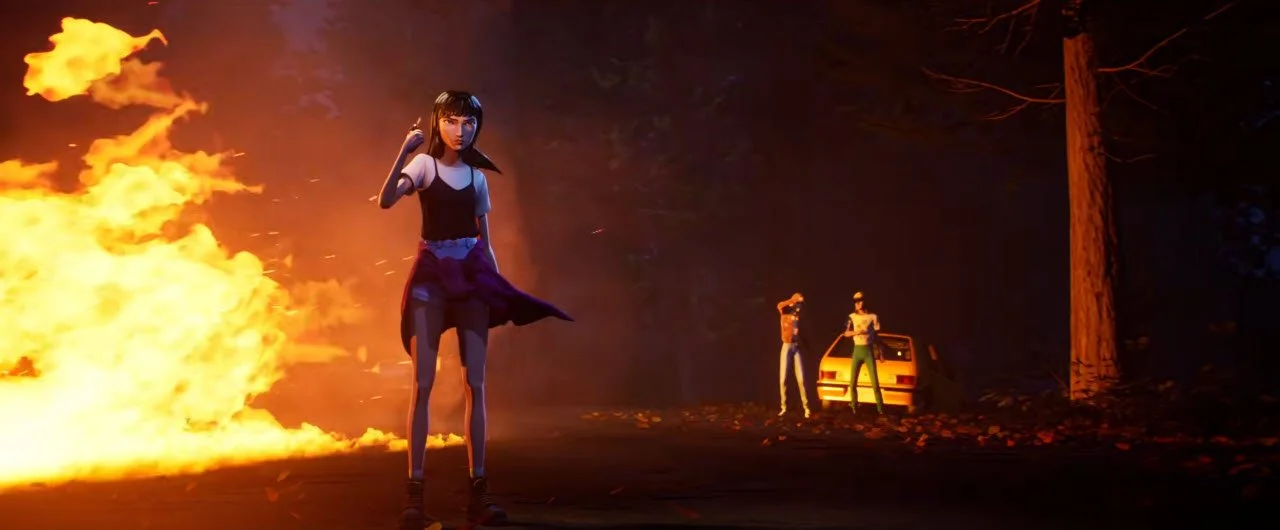
Image: Annapurna Interactive
Regardless of Cassandra’s vernacular choice, it’s her character arc that really makes her unlikable. We learn through flashbacks and “environmental storytelling” that Cassandra was an excellent student and athlete who did well in softball, but she wanted to rebel because she didn’t want to be part of her parents’ “plan.” She considers Stacy far more interesting because of her “passion” for music, while she is just a “list of extracurricular activities.” She wants to discover herself and find out who she is. It’s a perfectly typical coming-of-age arc for a character to have, but Mixtape fumbles the ball at every turn to make that desire endearing or rationally acceptable.
It’s explained that ever since she started hanging out with Van and Stacy, Cassandra has committed various crimes, including theft, vandalism, trespassing, underage drinking, and, potentially, use of substances like marijuana, which was most certainly illegal in the 1990s. Her grades have declined, and she’s acted out at school, even though she still managed to get into college in Southern California. Her father, a police officer—apparently, the only one in town—is represented in multiple scenes as a caring dad who has been frustrated by his daughter’s behavior. In the scene in which he puts his foot down and tells her not to go to the party, the game expects you to side with Cassandra, even though he’s the one making rational arguments about giving her a lot of trust and that he’s not going to pay for her college if she’s planning on going all the way there to party and squander her education. Cassandra’s father is the only sympathetic character in the game, and the writers unwittingly made him that way with his dialogue. They assassinate his character by the end, however. Speaking of…
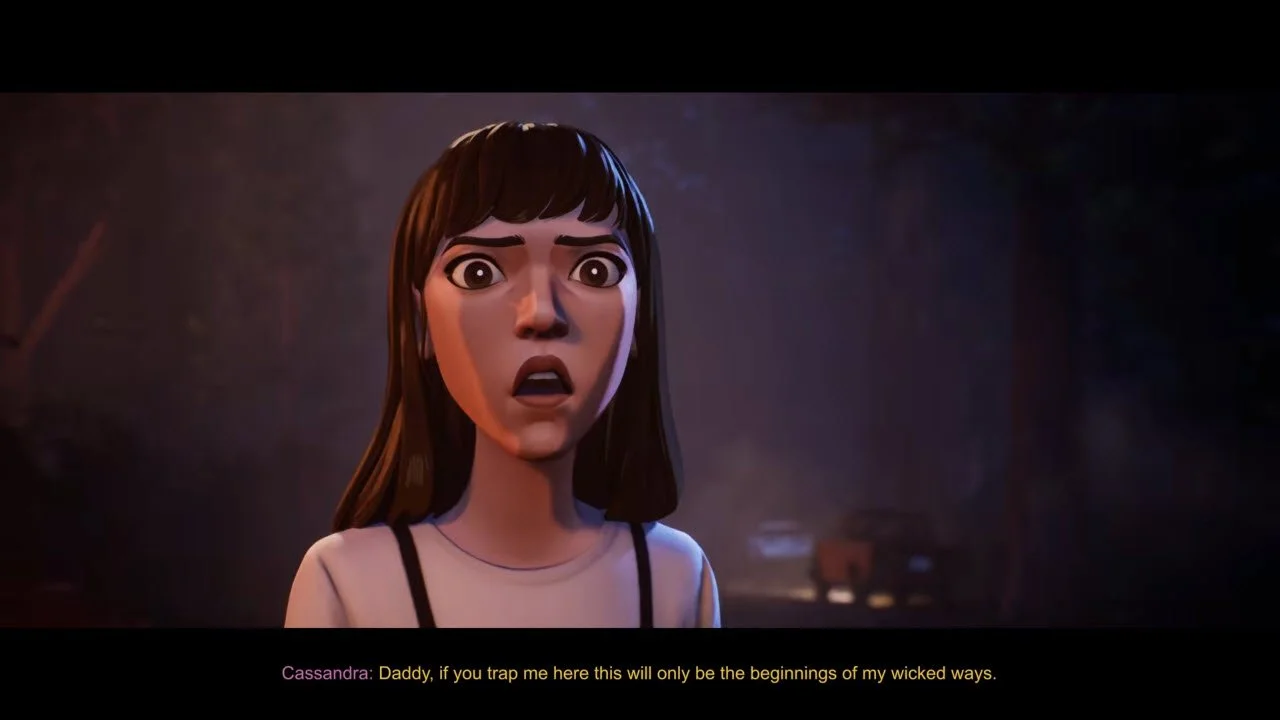
Image: Annapurna Interactive
The end of Cassandra’s arc is so bad that it elevates her to the level of the worst character in a moment that is pure cringe. As a fire spreads from a poorly placed firework at the forbidden party, Cassandra confronts her father as he arrives on the scene, holding a lighter. These are her actual words in the game that she screams at her father as dramatic music plays to accentuate the cringe of her delivery and her fury.
“I want you to understand, this ain’t a catastrophe—it’s a warning.
Daddy, if you trap me here this will only be the beginnings of my wicked ways.
Cus I’m angry and I’m wired and I’m fixing for a whole lotta’ trouble!
If you make me stay here, I’m gonna burn the whole fucking place down!”
This diatribe of brainless angst, somehow, convinces her dad, a police officer, to just let her and her friends escape the arson they just committed that is likely to spread through the dense forest that surrounds their community and burn down countless homes like the Camp Fire from 2018 in Northern California. She just committed arson and threatened to commit more arson, holding the town hostage as a means of making her point that her dad should let her do whatever she wants and to stop trying to guide her on the path to becoming a mature adult. He should arrest her and her friends and send his daughter to an asylum because she’s a danger to everyone around her. Alas, he cannot do that because the game’s narrative is on her side. He’s the unreasonable one who needed to be taught to listen to his teenage daughter, don’t you see?
As I said, not one of the three main characters is likable, but that doesn’t mean they couldn’t be made more sympathetic. If Cassandra’s father was portrayed as abusive or unreasonably restrictive, her acting out becomes more justified in the audience’s eyes. That doesn’t change that Cassandra’s arc should be steered more in a direction that too much rebellion could lead down a dangerous path, but it would at least make her acting out make sense. None of the parents is portrayed as a legitimate reason for them to act like losers—Van’s mother is the worst because she offers alcohol to a minor, but she’s not really a character anyway.
Mixtape Has Awful Messages and Themes
While Mixtape paints itself as a coming-of-age tale that follows in the footsteps of various classics of a similar genre, like The Breakfast Club or Stand By Me, its story is riddled with messages and themes that are bafflingly bad. The whole goal of the main characters for a majority of the game is to find alcohol for a party. These kids are 17 or 18 years old, and all they talk about, aside from music, is getting “fucked up” on weed and alcohol.
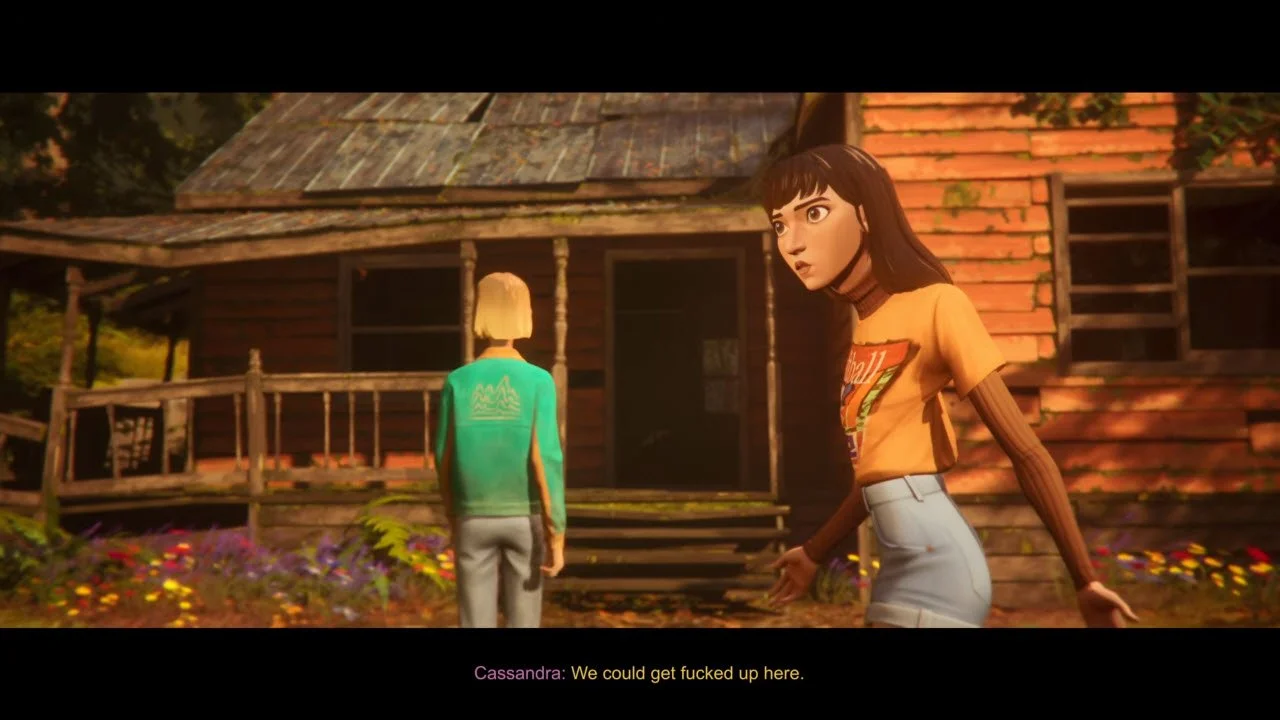
Image: Annapurna Interactive
Usually, in coming-of-age stories, the perception of leaving one’s childhood behind is a bittersweet experience meant to inspire the characters about who they are, but also humble them with the realization of where they fit into the world. They’re transitioning into a new phase of their lives where they have more responsibilities. The adventures they once had will live on in their minds as the greatest moments of their youth, but with an acknowledgement that they helped them grow into better people with the lessons they learned along the way regarding friendship, authenticity, and so forth. The characters of Mixtape do not grow in positive ways, nor do they demonstrate that they’ve learned any valuable lessons that will prepare them for adulthood.
Van, as I mentioned, is the only “creative” one in the group, but he lacks confidence and ambition to take his art beyond his town. Nothing about his behavior throughout the game suggests that he will do anything meaningful with whatever talents he might have. If I were to try to extract any positive themes or messages out of Mixtape, it’s how Van does his best to support and stay loyal to his friends. He’s still a loser who will likely just smoke weed and get drunk in his parents’ house for years to come, as nothing in the game suggests that he will become anything other than a caricature of a stoner.
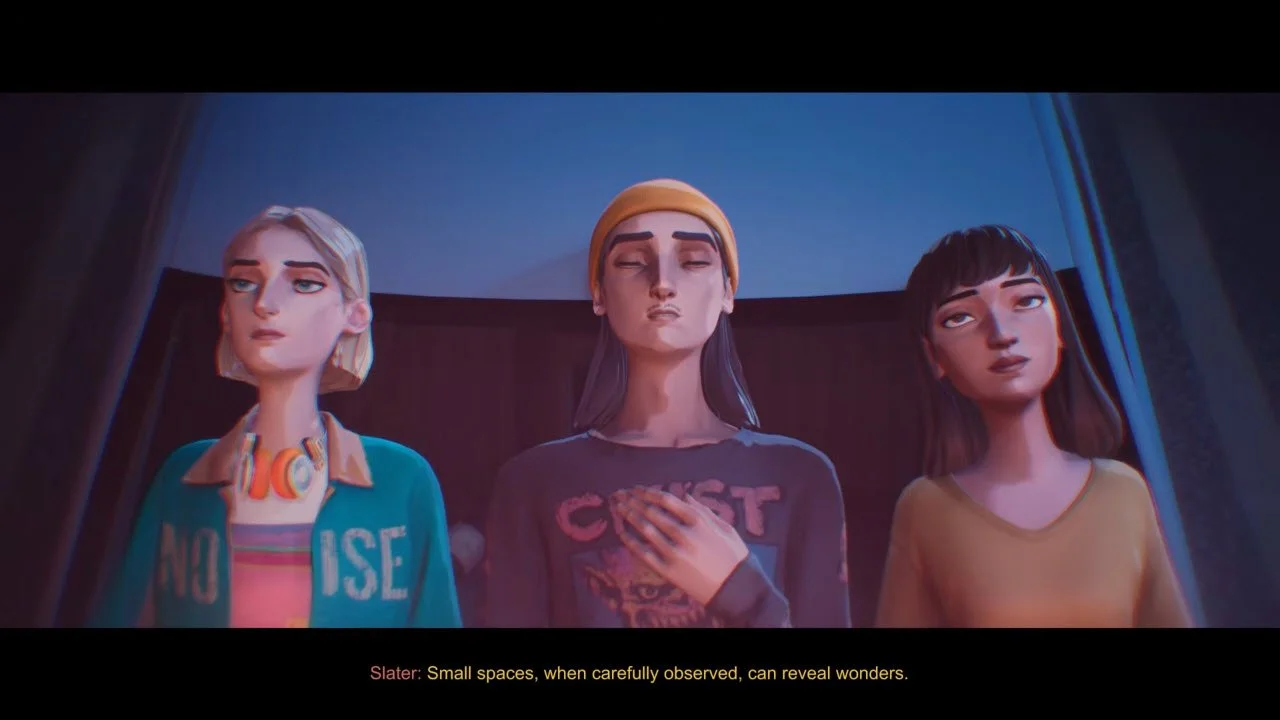
Image: Annapurna Interactive
Cassandra’s supposed to be going to college, but she admits to feeling aimless in her life about what she wants to do or who she is. She believes that without Stacy and Van, she’s just whatever her parents want her to be, and she seems to prefer just getting drunk all the time instead of striving for anything. It’s established in multiple scenes that her father cares about her and her future (with some very clunky dialogue), but Cassandra and her loser friends view that as “overbearing” and “restrictive,” as opposed to just trying to make sure she doesn’t stray into failure and drug use. The way Cassandra’s character arc concludes suggests that her desire to commit crimes, drink, do drugs, and party at college on her parents’ dime is all justified, and that is the path forward for her. She’s not humbled or redeemed. She just throws tantrums and gets her way as though that’s real justified rebellion.
Stacy is “following her dreams” by going to New York on a whim and stalking a woman so she can network and become a music supervisor. This assumption that she will succeed in her goals is based solely on ambition and self-assured talent that she doesn’t have. She makes mix CDs and tapes. That’s not a skill. She knows how to rattle off random facts, but she doesn’t know anything about music composition and admits that she lacks the ability to make her own music. Yet she’s convinced that sharing some CDs she’s burned of other people’s music in a particular order is a sure thing to achieve her goals and get the job of her dreams, rather than hard work. She is a talentless narcissist who is destined to end up a junky whore when reality hits her in the face, and she’s unable to recover from the fact that she’s done nothing to improve herself, making her incapable of keeping up with what society expects of her.
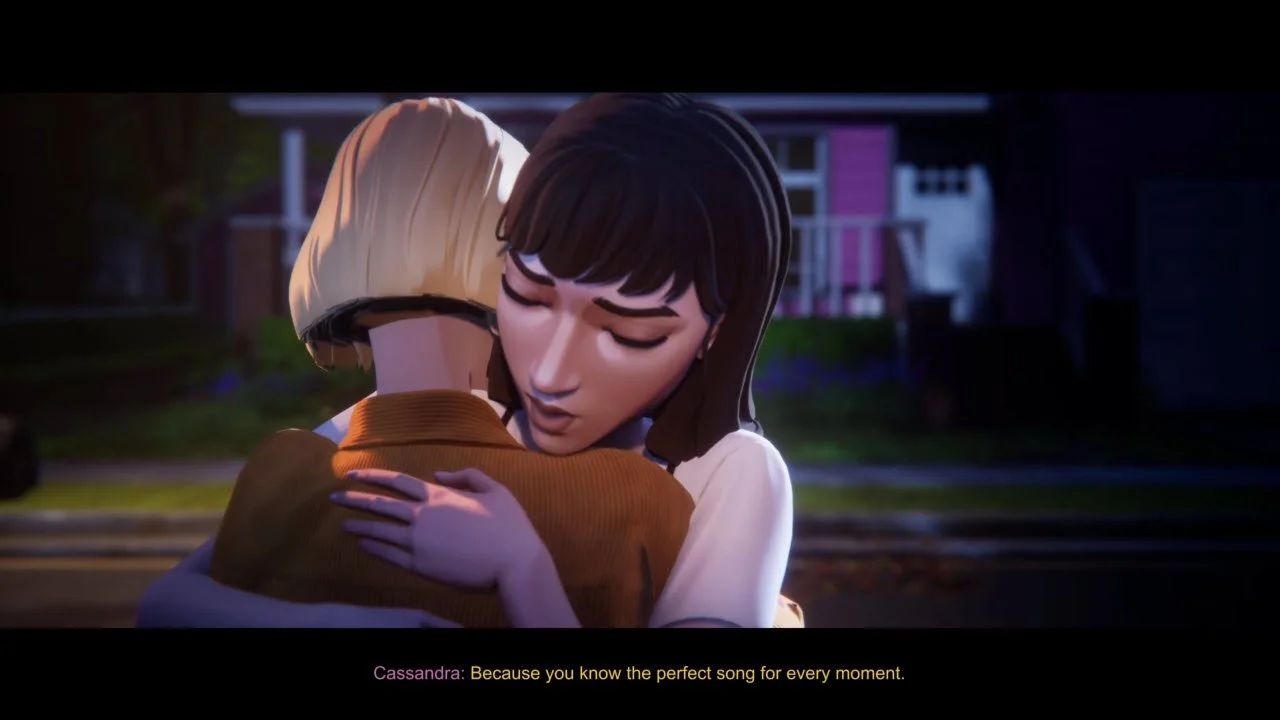
Image: Annapurna Interactive
With the behavior of these three characters and how they are mostly rewarded throughout the story, Mixtape is not sending a message that has any value. All the characters are disrespectful to their parents, and they aren’t really punished for it or shown to understand anything from an adult’s perspective, which seems to be the game advocating this behavior. All the characters commit crimes and destroy other people’s property before the story ends, suggesting that the game supports this behavior because being rebellious is cool. There is one scene in which Stacy gives a lighter to Cassandra as a gift, but we then learn that she just stole it from a nearby store. The game treats this as a heartfelt moment of bonding between friends, as though giving someone something that was stolen is just as meaningful as a gift that was bought with hard-earned money or made with effort. As the thieves run away from their pursuers, a song is played to give it a positive vibe, as though it’s a magical memory between the two.
There is barely a counterpoint to the behavior of the characters to provide nuance to the perspective, let alone one that distinctly shows they’re wrong. The only one who does is Cassandra’s dad, but he just folds like a piece of paper at the end and lets his daughter do whatever she wants because she’s a psychopath threatening to burn a town down if she doesn’t get her way. There are ways to still make these characters likable, too. Just because someone is a “criminal” in society doesn’t mean you can’t root for them.
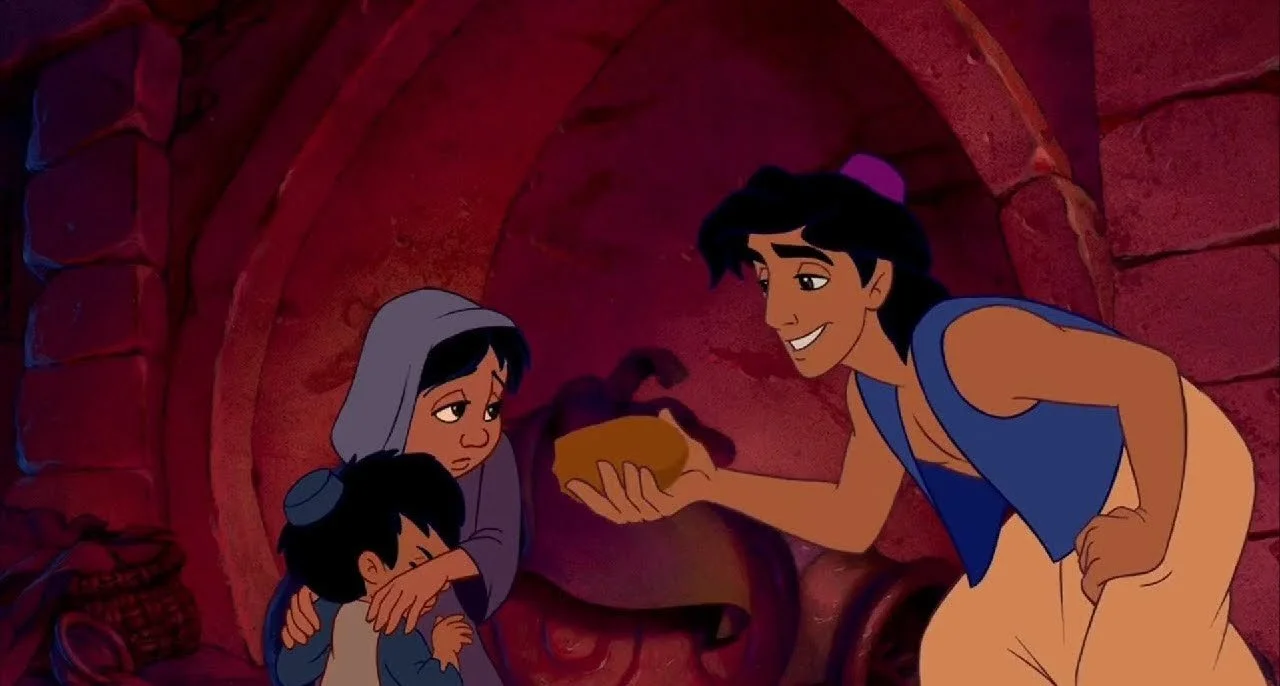
Image: Walt Disney Studios
Aladdin is a thief in his movie, but we like him for a variety of reasons. As soon as the movie introduces him, we learn that he’s a thief as he sings and runs away from the authorities. Then the movie shows us that he has a good heart when he gives two starving children the bread he stole. It’s a simple sequence, but it establishes who Aladdin is as a good person and the world he lives in as one of poverty and strife that partially justifies the act of stealing. Stealing a lighter, which is typically something cheaper than a loaf of bread and far less useful to a person’s survival, makes Stacy appear as a bad person, and the game does not seem to realize that in how it portrays the moment.
I knew people who smoked weed and drank alcohol in high school. I knew people who vandalized property and disobeyed the rules. I hung out with some of them. All of them had better attitudes than these characters. They talked about more than just music and didn’t break the law because they thought “crime is dope,” like Cassandra does and says. There was an understanding that when high school ended, they had to get a life. We all knew the ones who didn’t mature were going to be losers as adults, just as they were teenagers. If Van, Cassandra, and Stacy were people at our school, we would have shunned them and kept them out of our groups because they come across as fake posers who just want to cause trouble for the sake of credibility and not because there is anything genuine to them.
Mixtape is Barely a game
There’s been an ongoing debate in the video game space about what constitutes a game ever since the term “walking simulator” became a common term to describe a game with minimal interactivity. There have long been games that required no inputs other than typing, like Zork, or mouse clicks, like point-and-click adventures. It wasn’t until games like Dear Esther came along that the debate started to rear its head, however. If a game involves mostly walking around through a space and occasionally hitting a few button prompts, does that really make it a game? Is there a threshold of interactivity that must be crossed before something can be considered a video game, and if so, what is that threshold?
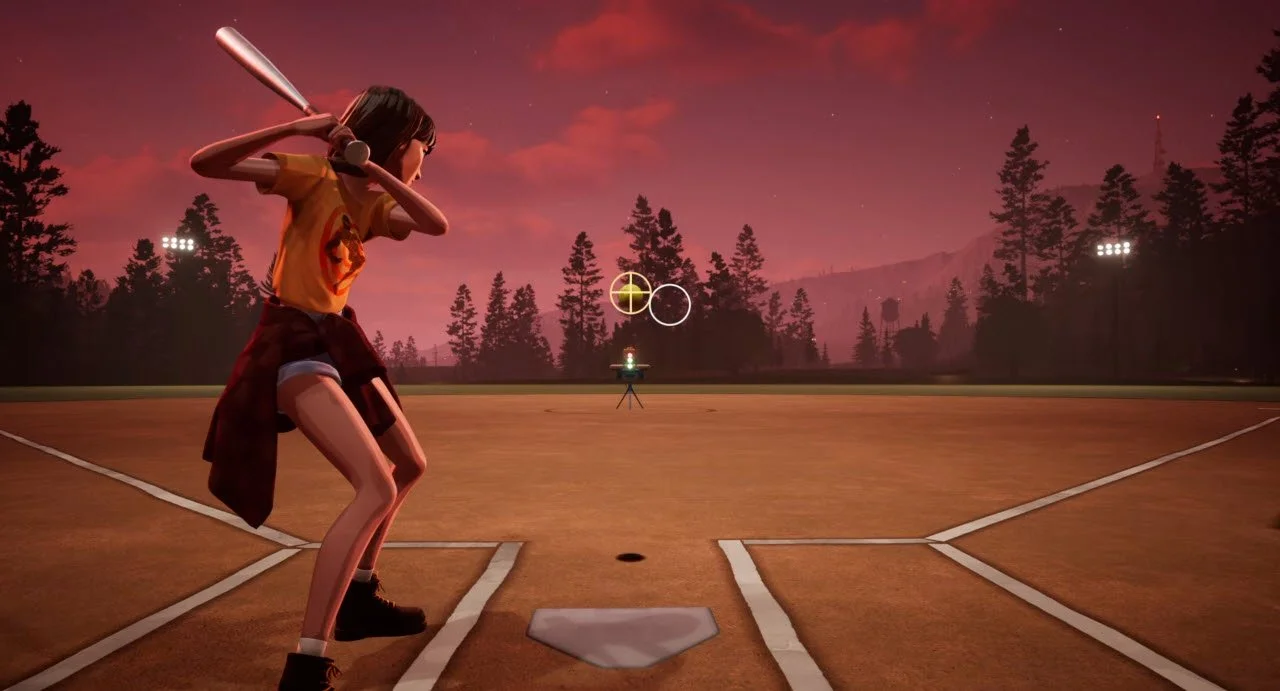
Image: Annapurna Interactive
I’ve long defended games that have reduced interactivity, so long as it gives you a meaningful experience as a game. Games like Layers of Fear, PT, or The Stanley Parable were entertaining experiences that had barely any puzzles to solve or things with which you could significantly interact. However, you could still tell a story over the course of a few hours and make players feel a variety of emotions as they made their way through the experience that was more immersive and meaningful than if you had simply watched a movie or TV show.
In some ways, Mixtape has more interactivity than the examples I’ve given. There are distinct levels where you can move your character, jump around, or throw skipping stones at objects to cause things to happen. So, by that standard alone, you could argue that Mixtape is more of a game than PT or The Stanley Parable. Why then is it commonly criticized as not being a game?
There are specific objects that trigger the next cutscene and sequence that starts the following level, but you’re not encouraged to interact beyond the bare requirements. It’s less that you’re being compelled to play something and more that you’re being asked to intervene when the story stops. The player has no agency, and if you don’t like the characters, you’re not going to want to interact with them, removing any motivation to propel the story further. While there are some situations in which you have to complete a task, like hit enough home runs at a ball field with an automatic pitching machine, most of the levels and sequences require you to just wait for the scene to end or a prompt to appear to let you leave. Others go on for as long as the chosen song is played, which can sometimes lead to sections that feel too long. These various levels and their lack of player agency say a lot about the design: the player’s involvement in the game is practically meaningless.
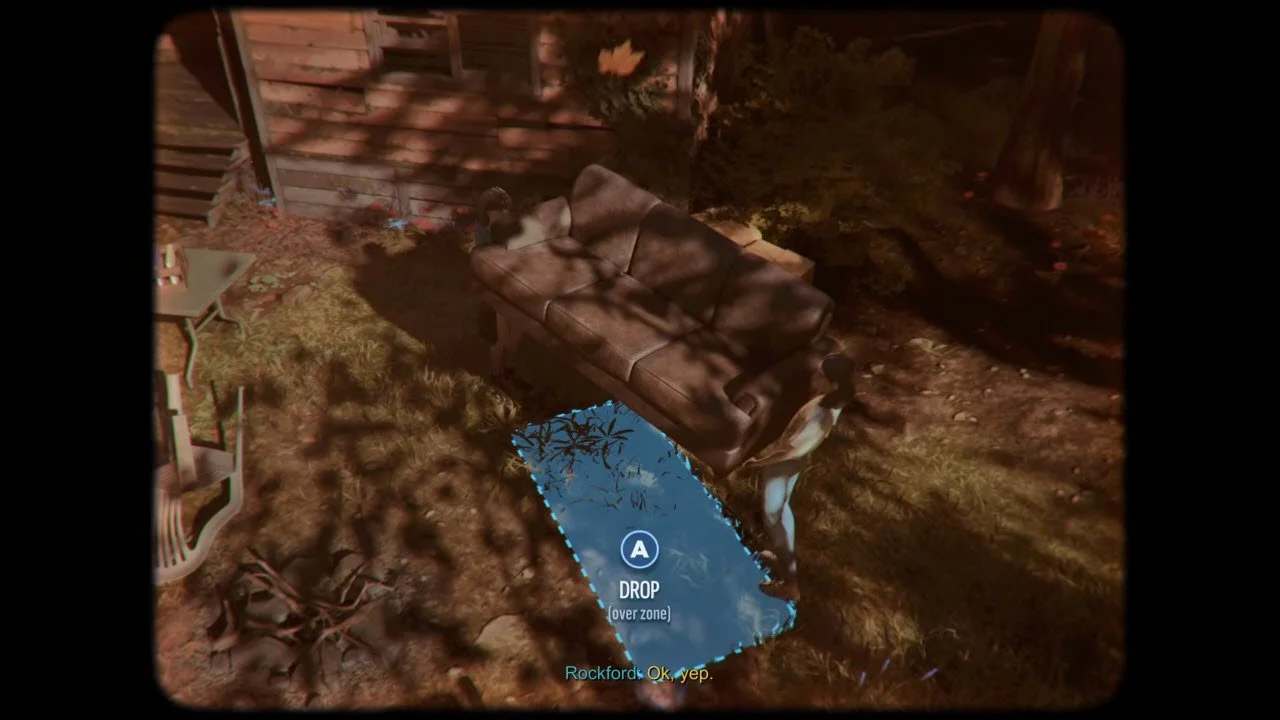
Image: Annapurna Interactive
Mixtape isn’t like The Stanley Parable, which gives the player the freedom to move around and explore to get more of a narrative in a unique way. Mixtape is an on-rails experience that forces the player down a funnel, especially during the levels that have the group riding on skateboards that move the players automatically. Even PT, a demo of a game that forces players to go down a hallway over and over, and which has fewer things for a player to interact with, has moments that give the player more agency in the experience than Mixtape. Mixtape asks the player just to watch its story, not engage with it.
This then raises the question: Why make it a game? If your product does not require your players’ interactions to meaningfully affect the progression of a game, and your game is mostly meant to be a narrative-focused experience with cutscenes and dialogue, why not make it a TV show or a movie? Unlike the 1990’s or early 2000s, the barrier to entry for making video games has gotten lower and lower as technology has improved. It’s gotten a lot easier for people to learn coding basics and how to design video games, so a small group of passionate developers can create and launch a functional video game without having to go through big publishers and corporations—more on that later. In some ways, it’s easier and cheaper to create a small video game than to do a show or movie, even if they’re supposed to be low-budget, short projects. Based on what I’ve seen of Mixtape’s story, I wouldn’t be surprised if it was rejected by various studios before it found a home in the video game format.
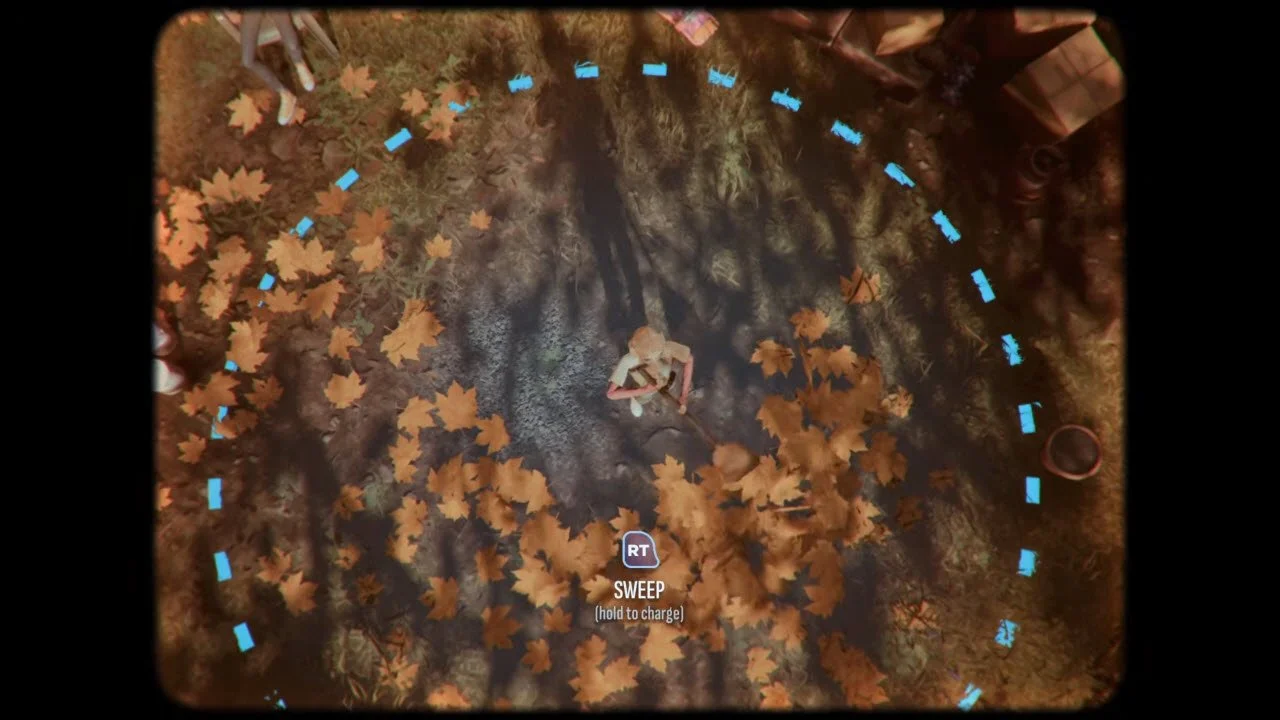
Image: Annapurna Interactive
For those that would still like to exile Mixtape from the “game” category, there is something that The Stanley Parable, Layers of Fear, and PT have that Mixtape does not: a failstate. There is no way to fail any of the minigames or playable moments. In any instance in which you might go off the rails, you are forced back into place without any punishment. While PT’s failstate is not always obvious, it still is a failure that requires the player to retry—if you know, you know.
Still, I would concede that, if we’re going to consider PT a game, Mixtape is a game—even if what you’re “playing” is not interesting, meaningful, or capable of failure. The reason so many would be willing to give PT a pass and not Mixtape is that Mixtape got a 10/10; it ties back to the attention it got regarding its score. PT may be a 10/10 for some people when it comes to how scared it made them or how atmospheric it is, but I don’t think anyone would be so bold as to say it’s a perfect game experience when it is so limited in terms of what you can do. The Stanley Parable is a clever game with some great, funny writing that encourages you to explore your surroundings. Again, I would be hesitant about giving it a 10/10 because it lacks mechanics to be worthy of giving it such a high grade. The Stanley Parable is still a fun experience for a variety of reasons, and it’s recommendable, but the equivalent of calling it a perfect game is a bridge too far. When the story and atmosphere of games with less interactivity don’t get the same level of praise, it brings a lot of negative attention to Mixtape.
Mixtape is Inauthentic and Inaccurate
When I say it’s “inauthentic,” that is not to insult any passion the developers had in making Mixtape. I’m sure there was a lot of passion behind the project. Certain members of the development team talk about it in interviews with a certain degree of passion.
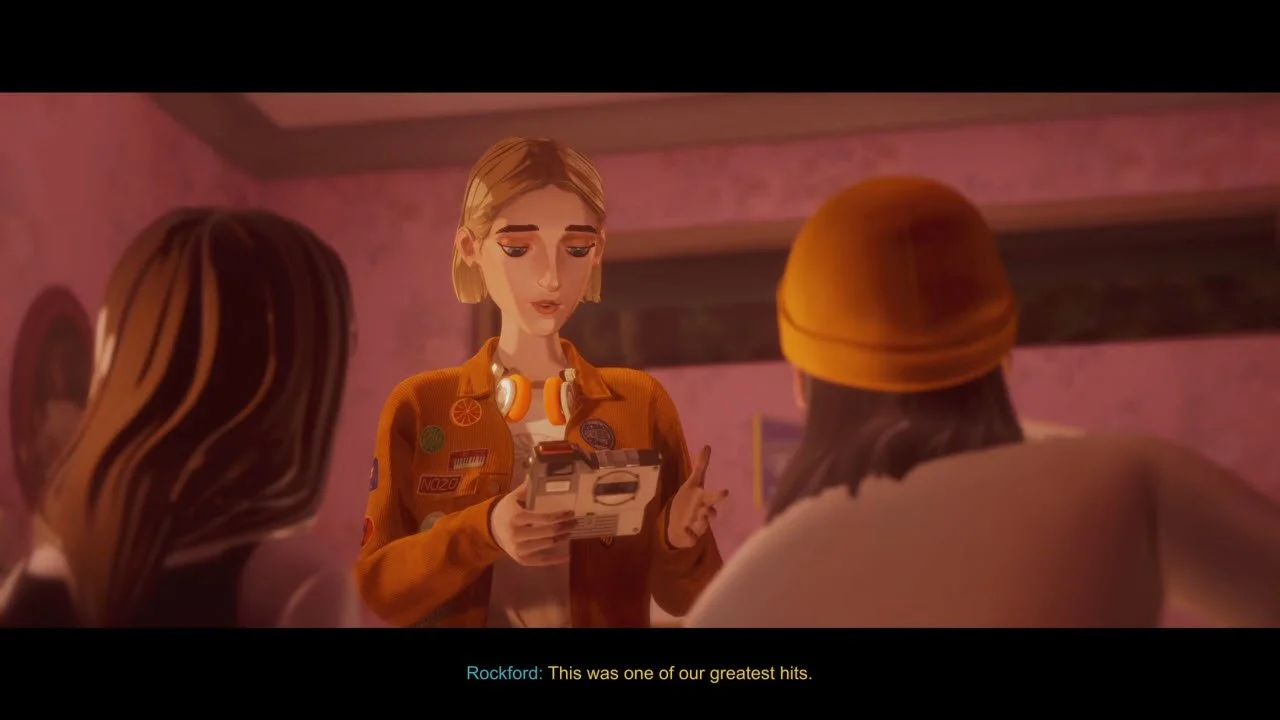
My point is that Mixtape is advertised and represented in ways that feel very inauthentic; it does not line up with what the game is really doing. The developers also did not seem to care how accurate Mixtape is at representing the people, places, or era in its story. Much about its design raises questions about its identity and who the assumed audience is for Mixtape. It certainly isn’t for someone like me, who was born in the 1980s and grew up during the ‘90s in California with a distinct memory of the culture and music of that decade.
Mixtape markets itself as an indie game. The “indie” is supposed to be short for “independent,” suggesting that the team that created the game is not just a small group, but that they created and published the game without significant help from any big corporations or even government subsidies. The team at Beethoven & Dinosaur is indeed relatively small, as the credits for Mixtape are quite short. However, to call Mixtape an “indie” project is not accurate when you consider the company that published it and the amount of money that is involved in the project.
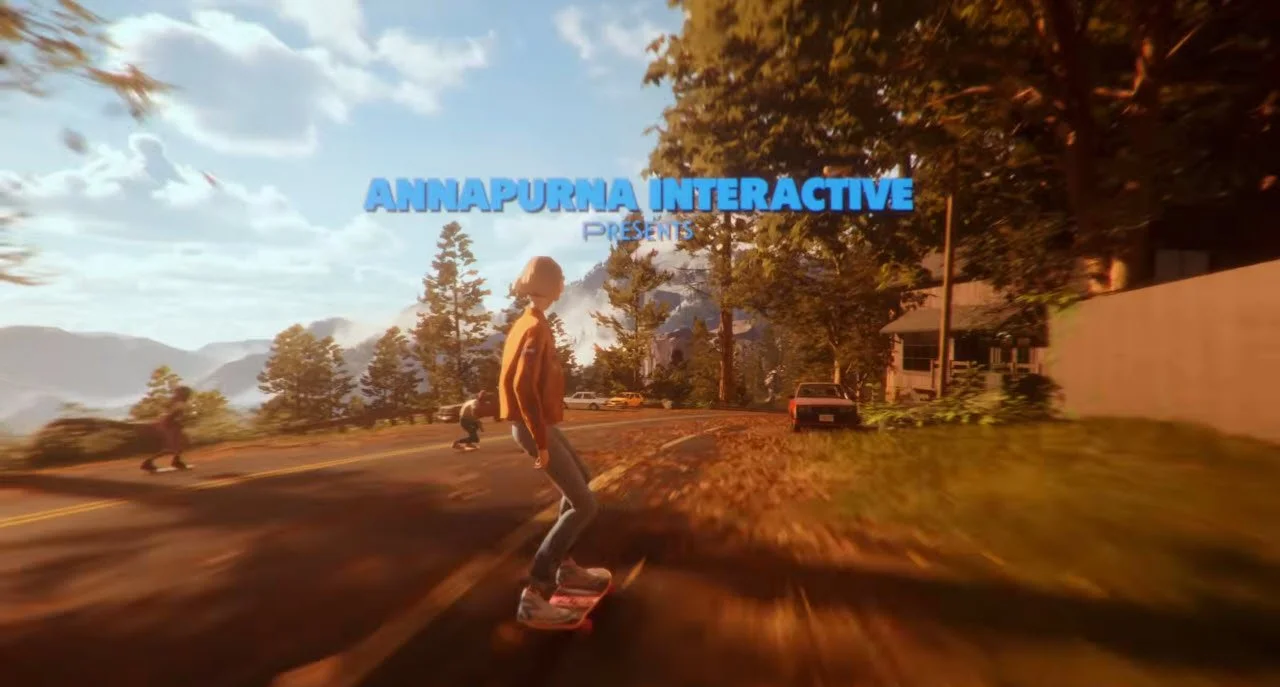
Image: Annapurna Interactive
Annapurna Interactive, the publisher, happens to be a company founded by Megan Ellison, the daughter of one of the richest men in the world, David Ellison (founder of Oracle). Annapurna footed the bill for Mixtape’s development, most of which involved paying for the rights to the nearly 30 licensed songs on its soundtrack. Because the songs are so integrally important to the game’s design and flow, and because the songs were all done by external artists, they needed to be licensed for the long term. While massive companies like Rockstar would get licensed songs for their extremely popular Grand Theft Auto games, the licensing they get for the music is not permanent due to the costs involved. That wasn’t an option for Mixtape with the songs so important to its design. So, Annapurna got the rights to have the licensed songs without renewal, which would cost somewhere between $1.6 million and $3.5 million. That’s just for the music, not including the rest of the game’s development and marking. That’s not an “indie” budget.
So, what about those coveted songs they paid so much for to represent this coming-of-age story told in the 1990s? Well, it might surprise you to learn that of the 28+ tracks, only 6 were released during the ‘90s. A vast majority of the soundtrack is made up of songs from the ‘70s and ‘80s, with even a few from the ‘60s. As someone who was an adolescent and teenager during the 1990s, the distinct lack of grunge, hip-hop, and even the pop songs of the era is extremely noticeable. The characters of Mixtape are supposed to be rebellious teens who care about being perceived as such, so they’d likely avoid songs by Britney Spears, Michael Jackson, or Whitney Houston, but the fact that there is not a single hip-hop song or even a metal song on the soundtrack, especially with how much they refer to being “metal,” is very noticeable. I hung out with metal heads, and they still listened to NWA, Tupac, Eminem, Notorious B.I.G., etc. There are multiple moments throughout Mixtape where something or someone is referred to as “metal,” and it feels so fake every time. There’s even a drawing in Stacy’s room from Van that resembles Iron Maiden’s mascot, Eddie, but there is not a single track by them in the game, nor any metal band from the 1990s. The hardest it gets is “Love” by The Smashing Pumpkins, but they’re more grunge—the recognition of what fits into the metal genre is something that metalheads care about.
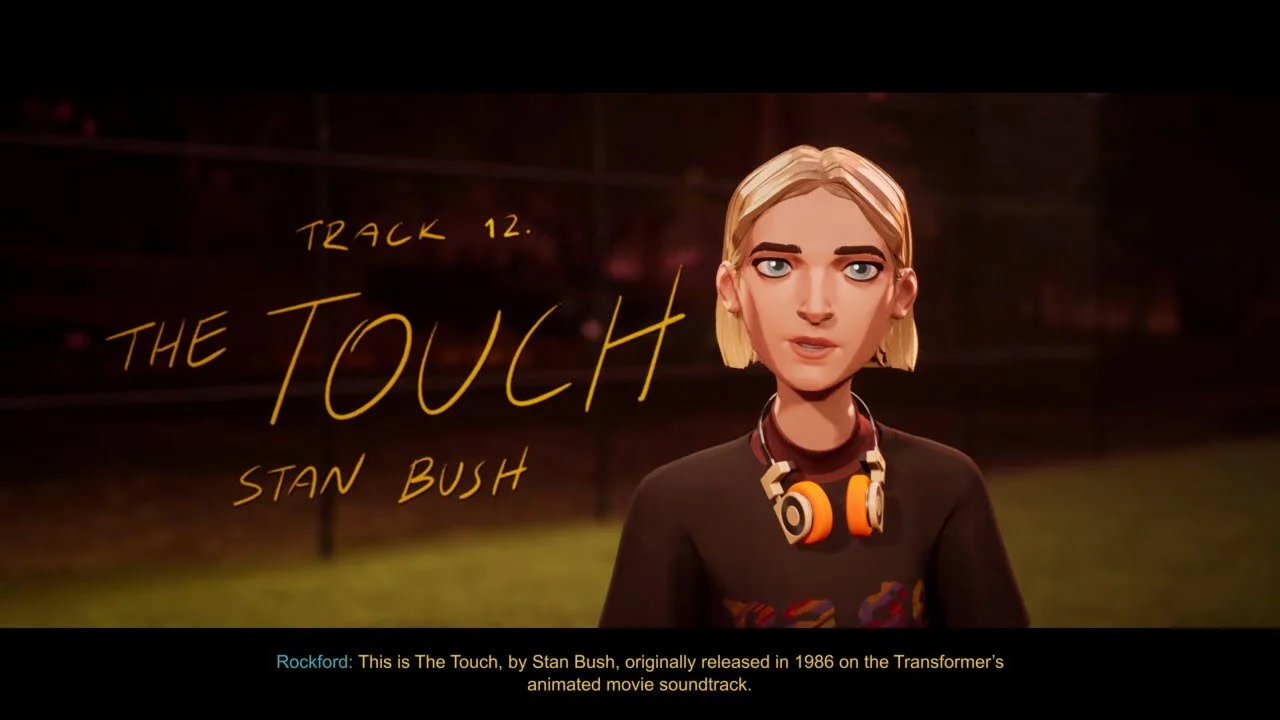
Image: Annapurna Interactive
The blending of songs on the soundtrack from different decades just creates an odd and confusing tone for the game, as though it wanted to play off the nostalgia of the ‘90s without committing to the decade. Not to mention that nothing about how the characters and their respective rooms resemble a ‘90s teenager. Their clothing style, decorations, and general appearance seem more appropriate to the 1980s, as most metalheads post-Nirvana would have more black clothes, chain wallets, and flannel jackets. Pair the confusing styles with the story that seems to be taking inspiration from John Hughes movies from the 1980s, and you have something that seems to be mining nostalgia from the wrong decade.
In the various streams I’ve watched, a rumor kept popping up that the writer and creative director, Johnny Galvatron, had originally planned to set everything in the 1980s, but changed his mind somewhat late into the project to move it into the 1990s because the ‘80s had become overdone by this point. While it’s true that the ‘80s nostalgia mine has been thoroughly plundered, and while I could not locate a citable quote from Mr. Galvatron—former singer of the electronica rock group, The Galvatrons—of this change, it still would not surprise me if it were true. I have read interviews with him, however, that confirm there is a John Hughes influence, that certain ‘80s bands like Devo were incredibly important to him, and that the three main characters are supposed to represent different eras. Considering the fact that Johnny Galvatron’s last name and the name of his former band are the same as a character from the Transformers Movie/Series, which was popular in the ‘80s, and considering the music/fictional inspirations, I’d say Mr. Galvatron feels more nostalgia towards the ‘80s than the ‘90s. In fact, nostalgia seems to be one of the things he likes to work with, since the one track that his band was most known for coincidentally happens to be called “When we were kids” and has lyrics that mirror how the three characters of Mixtape all go their separate ways. How interesting…
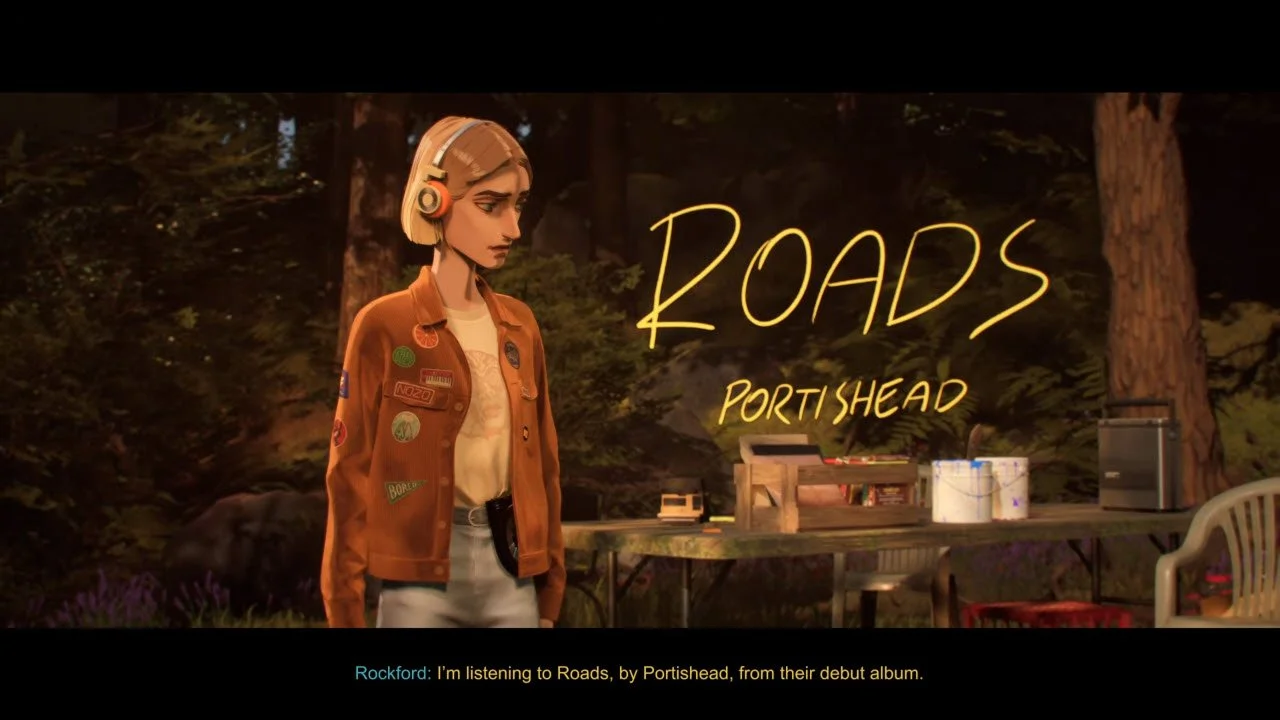
Regardless of the rumors and Mr. Galvatron’s apparent obsession with nostalgia, it doesn’t change the fact that Mixtape is a horribly cynical project. I call it cynical, not because it has a pessimistic view on things, but because it was made to just profit off of the things other people have created by tugging on people’s memories of their youth. Worst of all, it does a bad job at it by not committing to a real era and just doing a grab bag of tones and themes without putting any real effort into it.
The only thing it commits to in terms of assigning a decade is the sticker on the pause menu that shows 08/99. It’s a game called Mixtape, but the main character is using a CD player the whole time, with wireless headphones that didn’t exist in the ‘90s, whose style and slang are inaccurate to the decade it's supposed to be taking place in, in a part of the United States the developers are clearly not familiar with. The fictional town of Blue Moon Lagoon, which has many hills for the characters to skate down, resembles the Mt. Shasta area of California, which mostly has lakes and reservoirs, not lagoons. The characters all talk with the stereotypical surfer/skater/stoner-bro voices, but that style of speech is much more of a Southern California thing—though the SNL skit suggests that the rest of the world thinks everyone in the rather large state talks that way. I grew up in a coastal town in the northern part of the state, where there were plenty of skaters, stoners, and surfers, and none of the ones I knew talked like they do in Mixtape.
You know who does sound like a character in Mixtape? Johnny Galvatron! I don’t mean in accent, as he’s from Australia. I mean in what was important to him as a teen. In a VICE article, there are several moments where he discusses the project and his own perspective on things, and the same egotistical style of Stacy Rockford permeates his words.
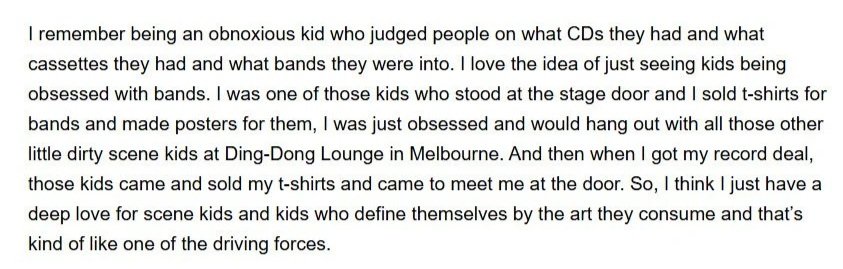
Mixtape really is just another Ready Player One story meant to act as a self-insert for its creator to pretend like their specific tastes and knowledge make them special.
Why is Mixtape Relevant?
To wrap this all up, let’s quickly discuss why Mixtape is relevant enough to get such a long article or countless streams critical of it. Mixtape represents a lot of what is wrong with the game industry and games journalism by extension.
Mixtape’s “success” sets a low bar for other games like it that seemingly exist only to profit off the efforts of talented people who created better and more interesting pieces of art and entertainment. It’s yet another piece of media that is utterly dependent on nostalgia to achieve its goals. It’s certainly not capable of telling a compelling story that is new or interesting, nor is it able to push forward any innovation in game design. Rewarding something like Mixtape with seemingly endless praise is like giving trophies to the kid who came in last place at a race. It sets a low standard for games and justifies the $20 pricetag for a game that is under 3 hours long and barely requires you to interact with it to get a subpar story. If games like it don’t get criticized, don’t be surprised if more flood the market in its wake.
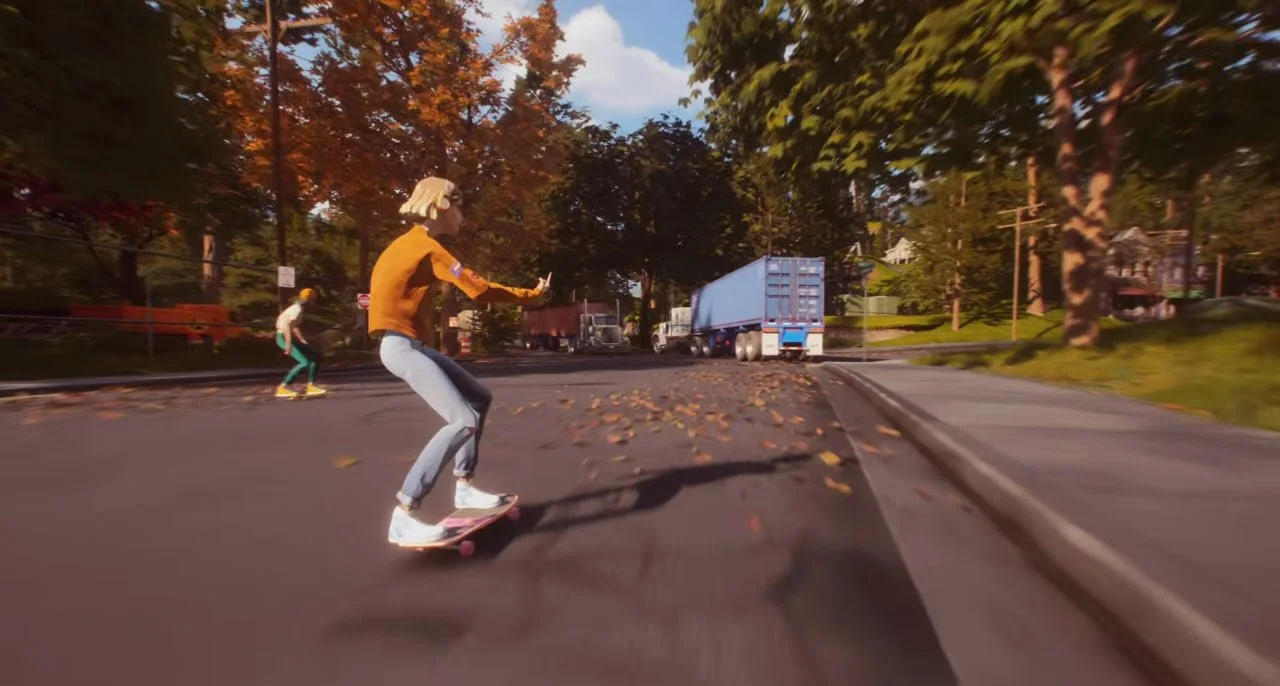
Image: Annapurna Interactive
As for the journalistic side, it’s just another shining example of how useless the opinions of game journalists have become. The endless praise it got from media outlets that received expensive care packages from Annapurna Interactive, including some fancy headphones from the game, shows how easily corruptible these places are. You have a “journalist” on camera telling Johnny Galvatron that his game’s skateboarding was more fun than Tony Hawk’s Pro Skater, one of the best skateboarding games of all time, seemingly to earn shill points so he can continue to get access to developers for interviews going forward.
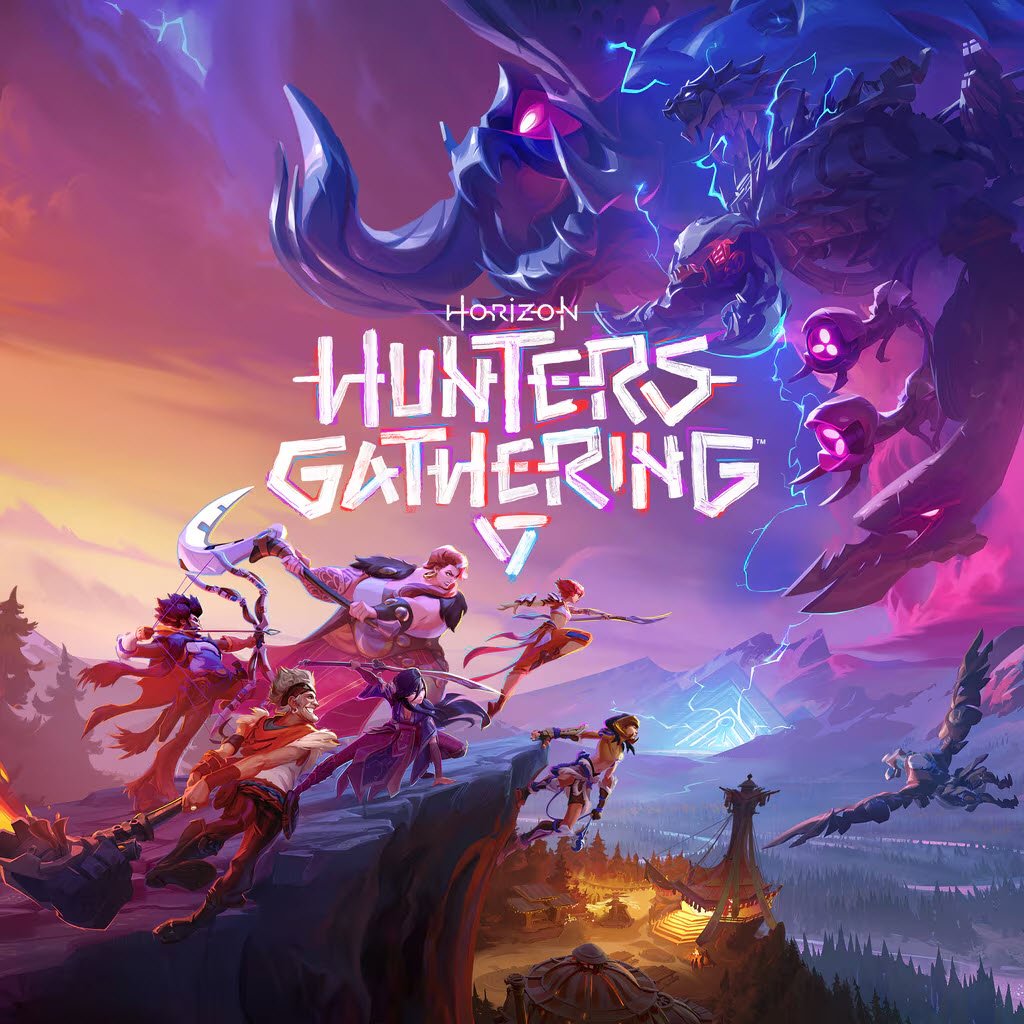
I won’t hammer home the point much further since I already spent many words criticizing these individuals and game publishers in my Comicbook.com critique articles. Just as Highguard presented itself as an indie game to avoid criticism and gain credibility, Mixtape has been presented as an indie project with humble intentions, only to be revealed as quite the opposite. It’s something that has received undeserved praise and defense from the media outlets, like many others before it. Mixtape, like Highguard, Concord, or Horizon: Hunter’s Gathering, is simply another symptom of an industry that is in trouble.