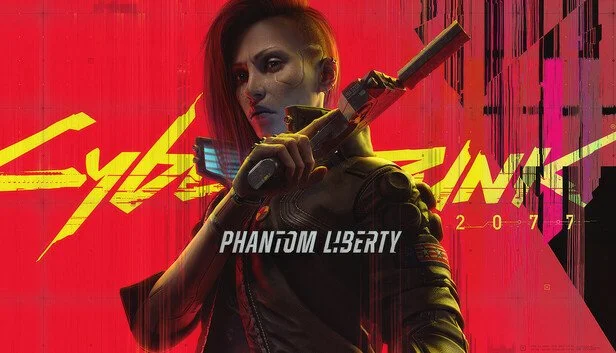
Cyberpunk 2077: Phantom Liberty | Liberate Me from My Phantoms
I have played through the main game of Cyberpunk 2077 multiple times, stopping only prior to the endgame segment in a few instances. However, I had not really engaged with the DLC, Phantom Liberty, until recently. Having started over and specialized in a character path that I hadn’t really tried, determined to make choices that made the most sense for V’s personality (as much as I could control), I finally started the DLC as I approached the same usual spot in the story. There were a few things that seemed interesting at first, just as there were a few details that stood out to me in not-so-positive ways. The more I progressed through the DLC, however, the more I began to have a strong distaste for it. By the time I was finishing the main storyline, I was so through I just wanted to rush the remaining story pieces and finish everything so I wouldn’t have the urge to play Cyberpunk again.

The Short of It
What I played
Phantom Liberty’s main story to completion once; did not follow other potentially “better” paths
I chose the “betrayal” path and chose to “kill” rather than “submit”
Standard Difficulty
> 7 Mr. Hands Jobs in Dogtown
Pros
Some side missions had mildly interesting stories and implications
More interactions with the mysterious Mr. Hands fleshed him out as a more interesting character
More outfits, vehicles, and high-level weapons to shake up the look and combat
Dogtown is distinct from the rest of Night City in its design and verticality
Mechanical and small quality-of-life updates slightly improve things
Cons
The main story has segments in particular missions that really wear out their welcome
New characters are a pathetic joke, with some being proverbial copies of each other in their personalities
The way the story is presented makes the writers look like pretentious twits with their heads up their asses, smelling their own farts
Getting around Dogtown or in and out of it is not much fun
Still a lot of bugs
New progression tree does not add much
Some missions have a lot of setup and not much payoff
The Rest of It
Story
If you looked at my list of cons, you might guess how I feel about Phantom Liberty’s main story. I will keep details vague past the initial mission to avoid spoilers, but just know that when I started to take issue with the main story, it really never improved. In fact, it only irritated me more and more the further I got into it.
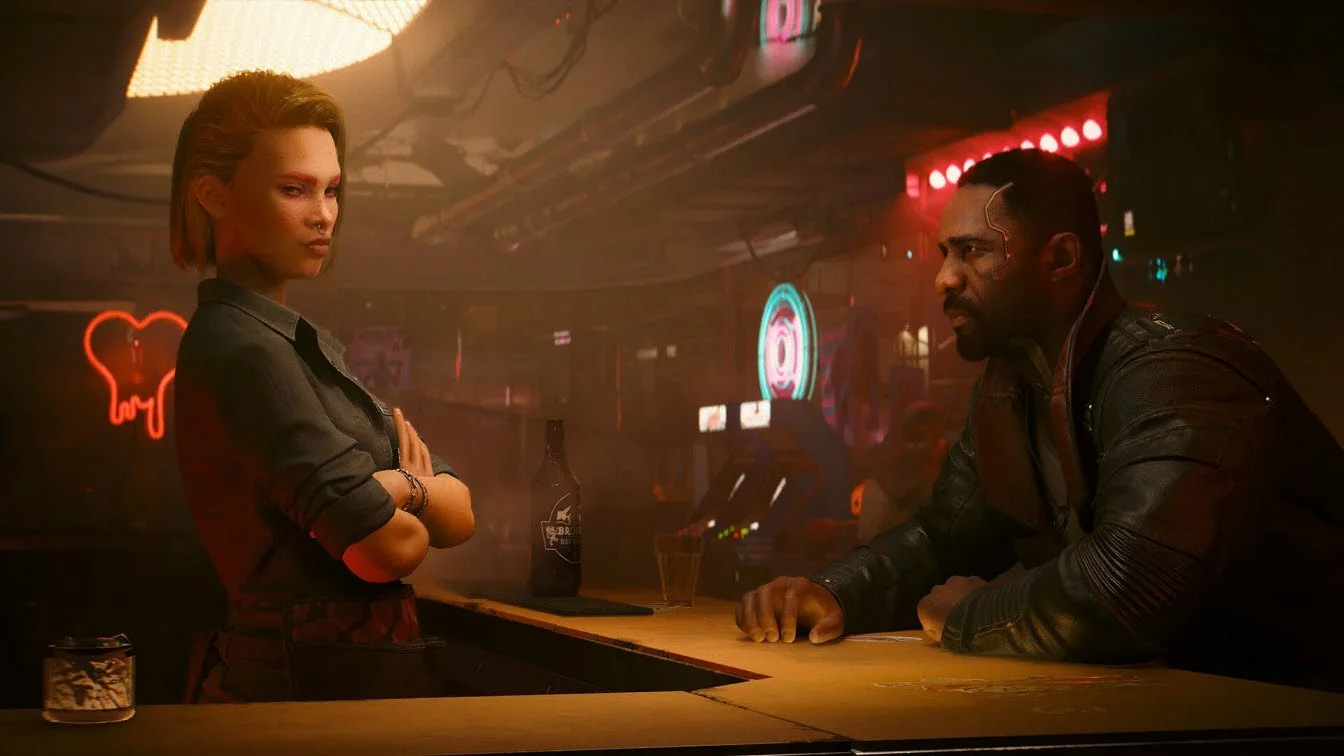
Image: CD Projekt Red
On the outer edges of Night City is a district called Dogtown. It was a place that had been overrun by criminal activity during the wars that occurred years prior, but a group of military-trained soldiers and their heavy weaponry, led by Col. Hanson, came in and wiped them out. Rather than return to base as ordered, they claimed the territory for themselves and fortified defences surrounding it. Ever since then, it’s been something of an open-air prison to its inhabitants, with strict restrictions on who can come and go, corruptly run by the tyrant Hanson.
If you approach the outer edges of Dogtown, the Johnny Silverhand Relic in V’s head starts acting up, and you are approached by a projection of a woman named Songbird. She’s a high-ranking edgerunner who is on a plane with the president and promises to help V with the relic killing him/her, because she claims to have the technology and knowledge to do so. V just has to help her secure the president’s safety in a situation that gets more and more dire as the aircraft is shot down by Hanson’s men and crashes in Dogtown. Obviously, this being the main story of Phantom Liberty, and V’s motivations to get rid of the relic, oblige you to accept this quest and help Songbird. At some point during the first mission, Songbird goes missing. From there, the story spirals out, and V has to do a variety of missions with Songbird’s old mentor, Reed (Idris Elba), to learn who might have betrayed the president and how to rescue Songbird from her predicament.
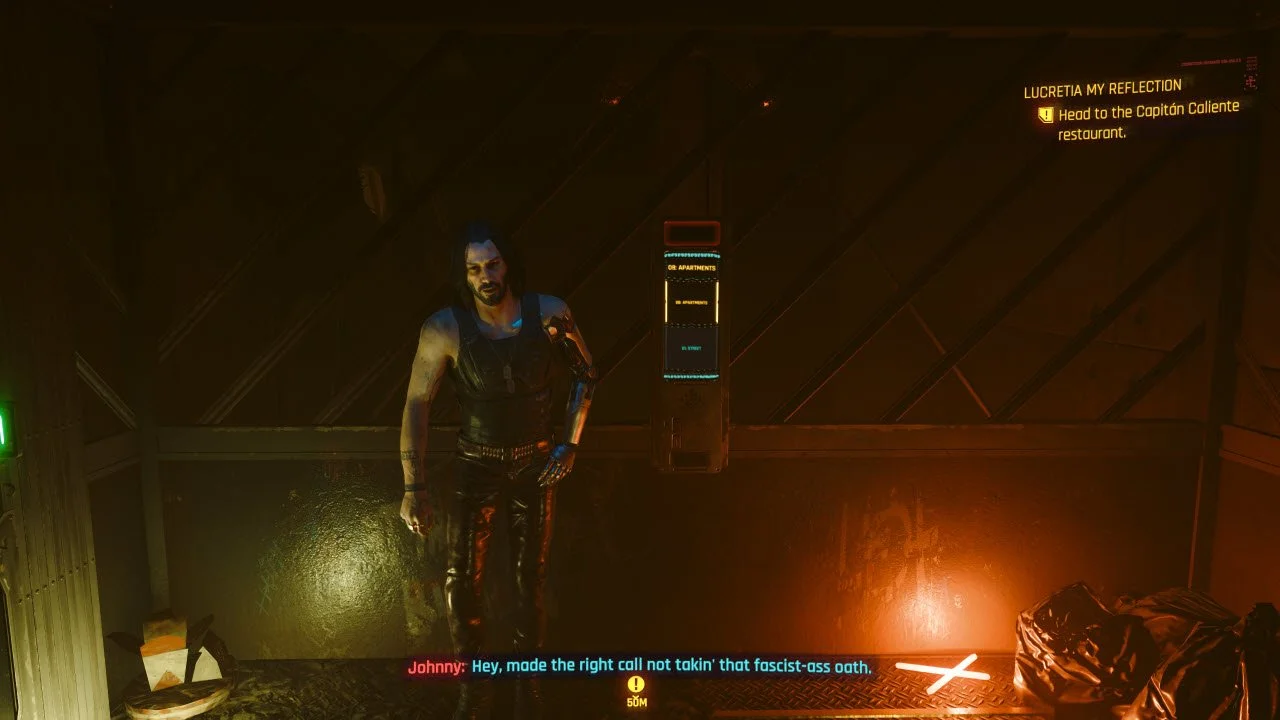
Image: CD Projekt Red
On paper, that synopsis may not seem that bad, but there are things to call out about it that I think diminish the impact and interest of the story. The mystery of who might have betrayed the president is pretty explicitly stated relatively early in the DLC’s main story, and it’s not really a surprise. The real driving point of the main plot is to rescue Songbird, a character whom you barely know and who is out of contact with you for a while after the first mission. Meaning, you don’t get a lot of time for Songbird to become a character worth caring about.
The writers of Cyberpunk seem to have an issue with accomplishing this goal because it was one of the things I criticized it for in my original review, with the character of Jackie. I have far more attachment to Johnny Silverhand, despite being a character who is often willing to criticize your choices throughout the story and flatly played by Keanu Reeves. I’ve spent a lot more time with him, and he’s a developed character. Why should I feel compelled to help Songbird when I just met her? Sure, she promises to get rid of the relic, so that would be a motivation for V, but what is my motivation as the player? I have no reason to believe she could or would fulfill her promise, and the writing does not do enough to convince me otherwise. Your various interactions with the different characters, including Songbird, are focused more on why they're either cool or damaged characters who deserve your sympathy, but it’s so heavy-handed in almost every scenario that I found myself becoming actively disinterested in their problems. The characters range from boring to just annoyingly lame.
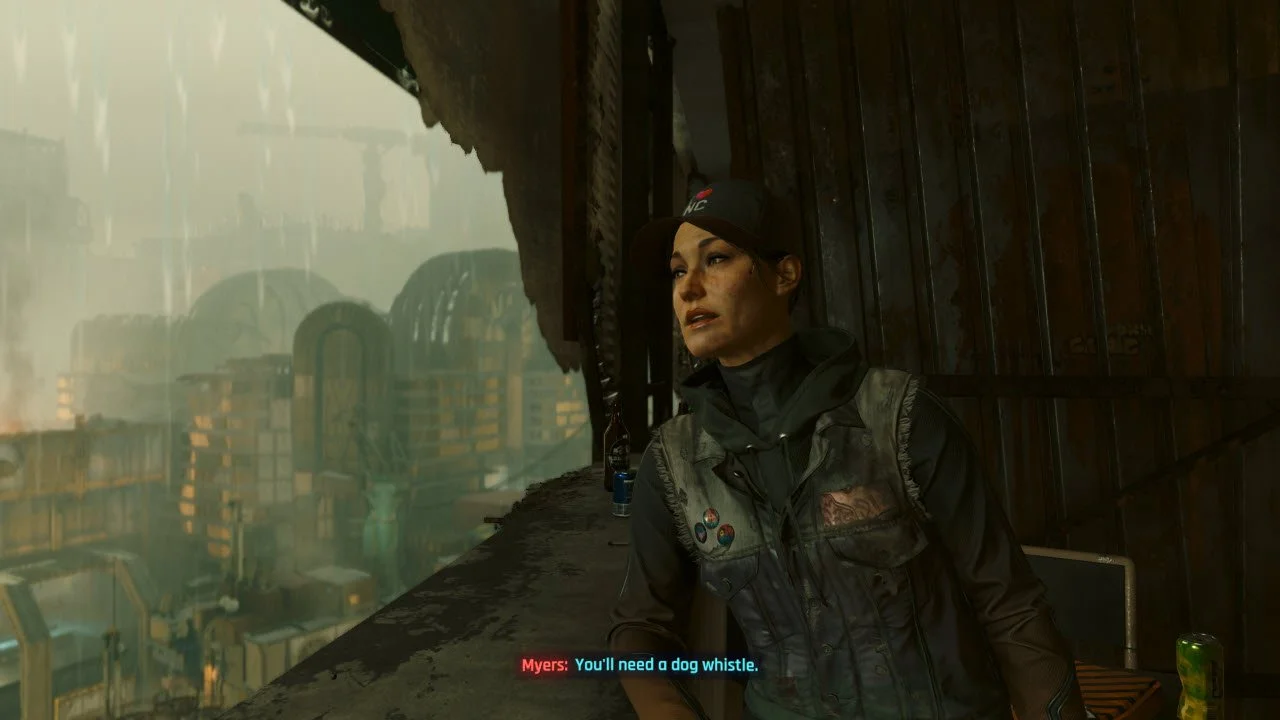
Image: CD Projekt Red
Songbird is supposed to be a cool, confident edgerunner whose capabilities blow V away when they first meet her. The problem is that by the time you meet Songbird, you have interacted with so many cool, confident female characters that she doesn’t have much special about her personality to make her stand out from the rest. What makes her more interesting than Judy, Rogue, Panam, Alt Cunningham, the female handlers, etc.? I don’t really like Panam, but she’s got enough personality, and you do enough missions with her that a rescue mission on her behalf is more motivating to me as a player. You know Songbird for less than an hour, and you’re supposed to care about her enough to get involved in a secret group of government spies to rescue her.
The other characters don’t do enough to drive the plot or provide much meaning to the story. Reed is the typical grizzled mentor who has seen too much action and done terrible things he regrets, but is still willing to come out of retirement for his protoge. Idris Elba provides plenty of sad faces throughout the story to sell the empathy you’re supposed to have for him and his perspective, but it’s never enough to elevate Reed beyond an archetype. If there is any character that I had any interest in through this whole thing, it was Reed, mainly because he was the main one you interacted with the most, and the writing didn’t try so hard to make him cool at every opportunity. There were at least a few moments that were brief enough not to overly embellish Reed’s talents, like when he comments on how he noticed your body language change when you interact with Johnny Silverhand, or how he coldly moves on after a disastrous moment in the story.
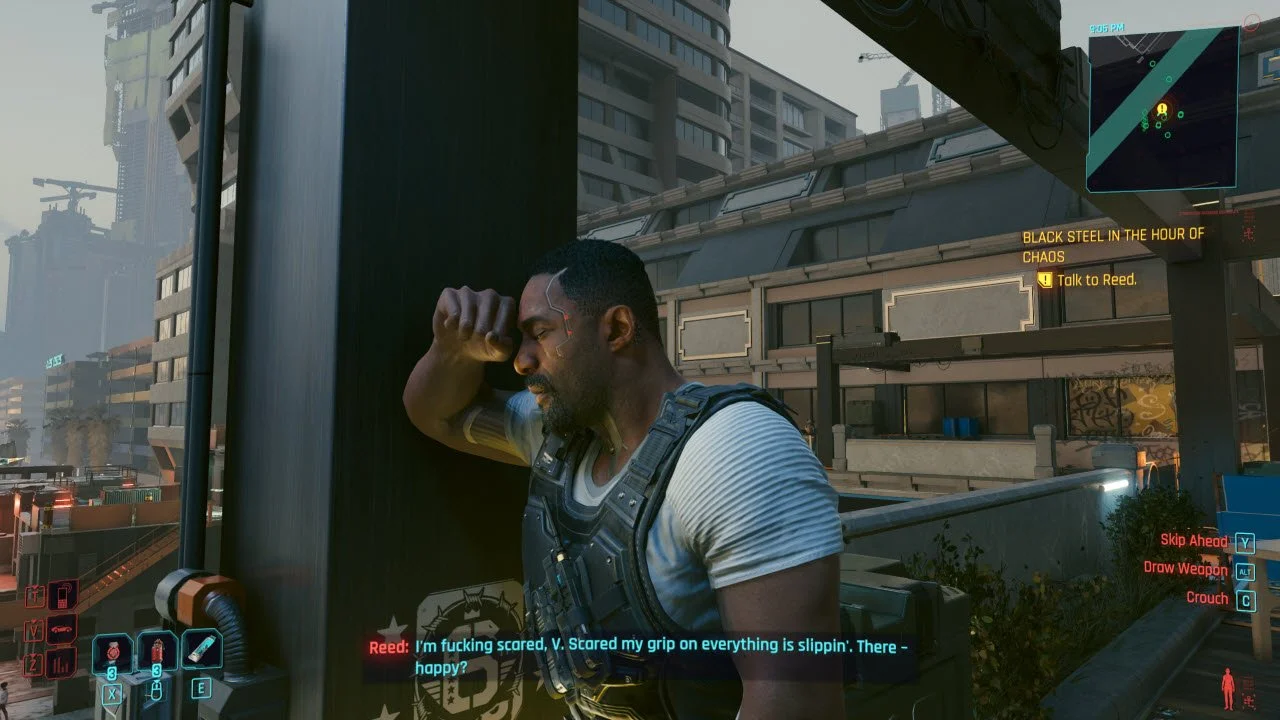
Image: CD Projekt Red
As for the characters I actively disliked, I thought that Hanson was an uninteresting and dumb villain, and I thought two particular female characters were such boring girl bosses that they could have been interchanged with each other. Hanson is supposed to be a brilliant tactician and tyrant with ultimate control. Yet, the mission in which you meet him for the first time is one in which he should be able to quickly kill you and Reed, and opts not to for no real reason. You’re more or less able to just sneak around and take apart his operation, and he can’t do anything about it until your inevitable encounter with him. He’s no interesting boss battle, either.
As for the female characters I won’t name, I was irritated by how by-the-numbers they were, with the arrogant, never-ending girl-boss confidence and authority in their speech—one of whom the game heavy-handedly tries to make you care about with a few specific conversations. They practically had the same personality and even a similar hairstyle. Had they ever been in the same room together, it would have been difficult to tell them apart. Maybe if they touched, it would have caused a singularity that formed a black hole within Night City and destroyed the universe.
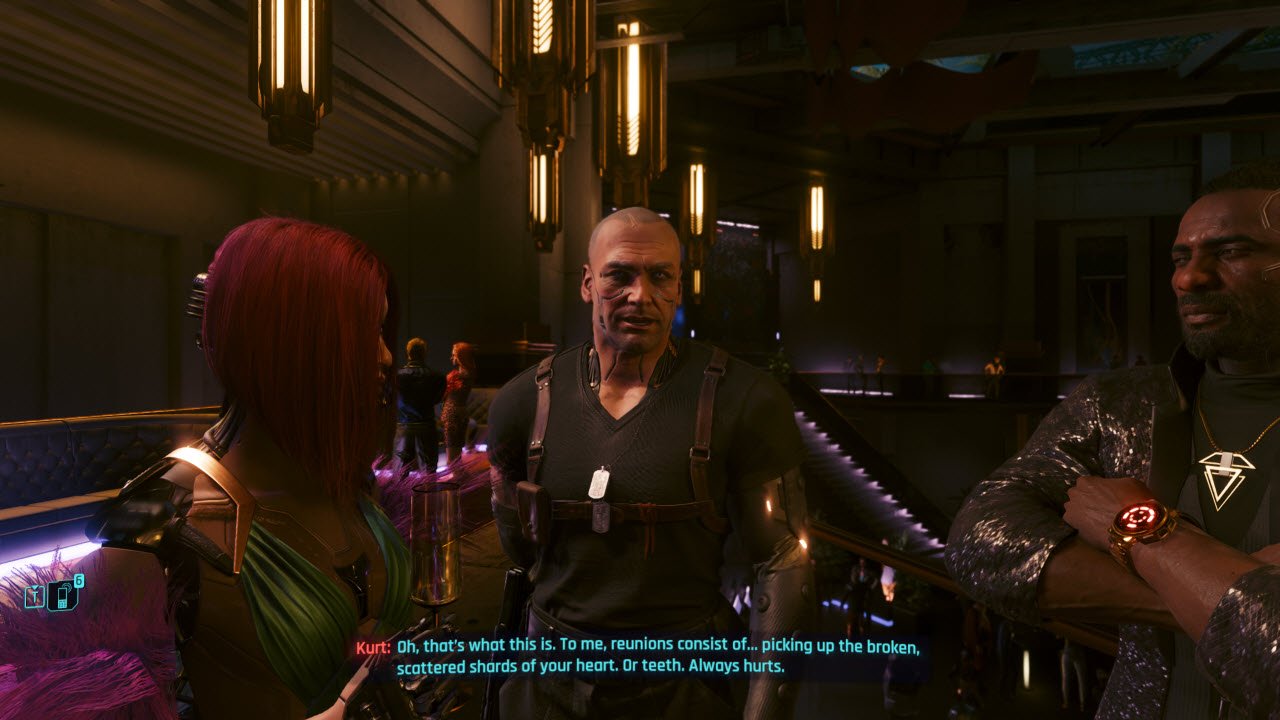
Image: CD Projekt Red
The one character that improved with Phantom Liberty was Mr. Hands. He was a mysterious handler in the base game with a particular way of speaking that I appreciated for making him stand out from other handlers you would interact with throughout the game. Phantom Liberty gives him a bigger role and more opportunities for you to interact with him. He doesn’t steal the show or anything like that, but he is around enough to make things a little more engaging. The missions you do for him manage to be a little more interesting than standard side quests in the base game, with some unique twists and funny moments.
All in all, I just think Phantom Liberty’s main story experience mostly sucks from start to finish. The first mission starts with a self-indulgent “CD Projekt Red Presents: Phantom Liberty” title card when the plane gets shot down and then proceeds to go on for far too long, with a particularly boring boss battle that drags on and on—there is an obnoxious closing credits sequence when the story of Phantom Liberty ends as well, to further enforce that the developers thought that they were cooking when they wrote this crap. It takes multiple hours to get to a point in the first mission before you can finally explore Dogtown on your own. As the story progresses and you learn more about Reed and Songbird, the writers want you to be sympathetic to their characters’ tragic backstory and the struggles they went through, but I frankly just wanted it all to end with both of them dead and gone behind me. A later portion of the story has you exploring memories of Songbird and Reed, and I could not care less, especially because of how annoying the gameplay of that particular mission was.
Gameplay
The overall gameplay experience of Phantom Liberty remains the same as the core game. The key changes are a new progression tree, a level cap increase, some new side missions, and the occasional alteration to the mission format in the main storyline.
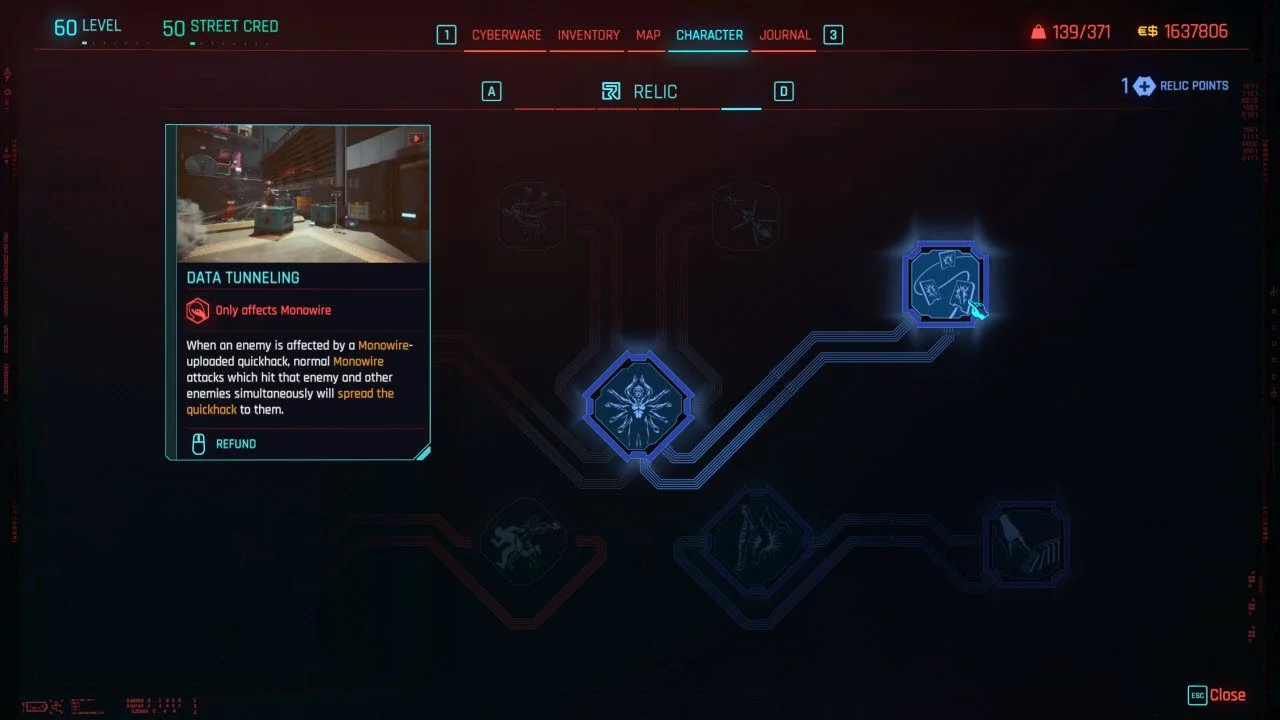
Image: CD Projekt Red
I mentioned in my original review that V is a powerhouse of a character when specializing their upgrade path. The increase in the level cap by 10 levels only further makes them extremely strong and overpowered on Normal difficulty. While I still occasionally died in fair scenarios involving gunfights with numerous enemies, by the time I reached level 60, I stopped being intimidated by groups of enemies consisting of 10 or more individuals. I could have bumped up the difficulty, but I was enjoying the power trip of just skipping the stealth and ending conversations with a bullet. Surprisingly, the new progression tree does not add much to the experience. There are some little bonus abilities you can get that certainly make you stronger in combat encounters, but not by a significant enough margin that I really was that motivated to find the points to fill it out.
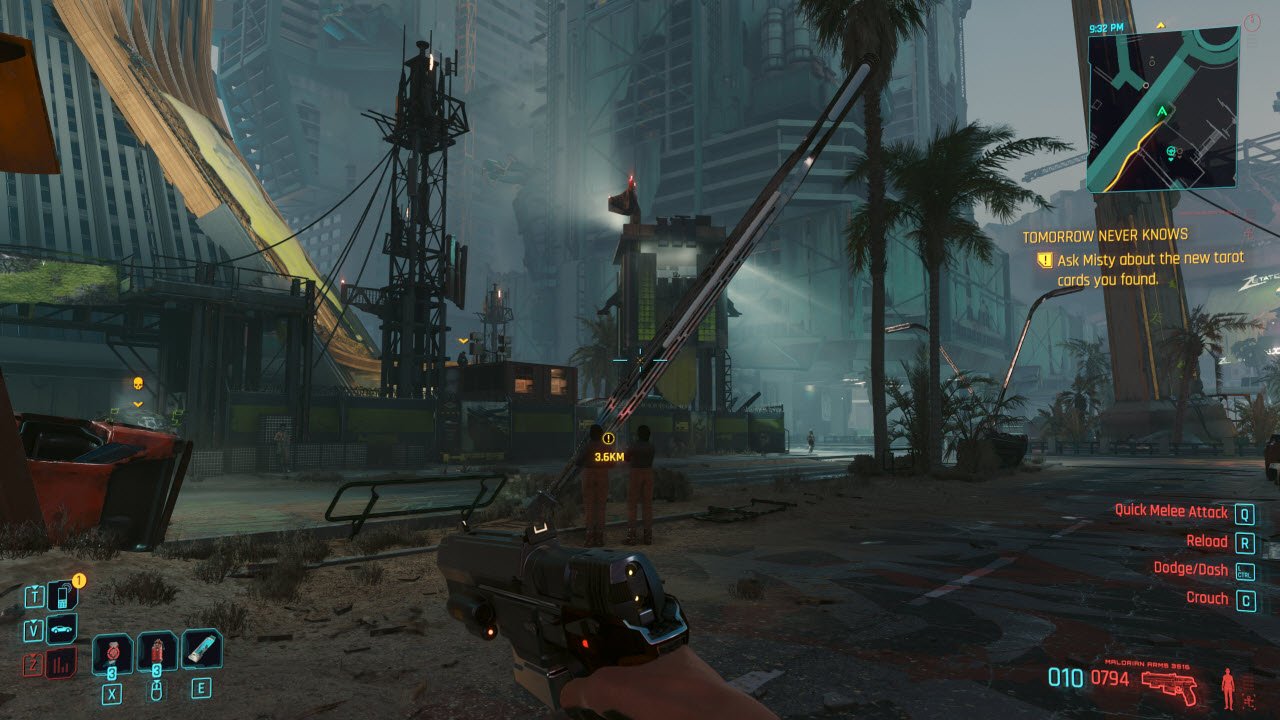
The main change to the gameplay that Phantom Liberty brings to shake things up mostly happens during the main storyline. The side quests for Mr. Hands have some interesting stories, but don’t add any special mechanics. The main story missions, however, try to add something to spice up the action. There’s one in which you have to tag and snipe enemies while another character infiltrates a base, attempting to remain in stealth. There’s one in which you do a little tower defense and assign locations for mines and turrets to ambush some enemies. There’s one in which you have to stealthily avoid a stalking enemy. These additions to the gameplay flow are all things I have seen in other games, and they’ve all been done much better elsewhere. The stealth mission of providing sniper support was probably the best implemented of those that I mentioned, but the rest are either barely a half-baked addition or something so poorly implemented it should have been removed entirely.
The late mission involving the stalking enemy is a blatant rip-off of Alien: Isolation that immensely frustrated and annoyed me. Alien: Isolation is specifically designed around stealthily navigating environments and using distractions to avoid being spotted and killed. The Xenomorph in that game instantly kills you if it manages to catch you, and the levels are designed specifically to give the players different avenues of avoiding detection.
The mission in Phantom Liberty that has its own Xenomorph equivalent is forcing this new mechanic into a game that has a much simpler stealth design. It has many rooms with very few options for you to avoid the enemy. A majority of Cyberpunk’s experience is designed to let you approach scenarios with stealth as an option, but with the ability to fall back to full-on combat when that fails. Going from being an unstoppable killing machine capable of taking down groups of enemies, or even a much larger enemy in the first mission, to having to hide from this much less intimidating enemy with no method of fighting back created an annoying amount of cognitive dissonance.
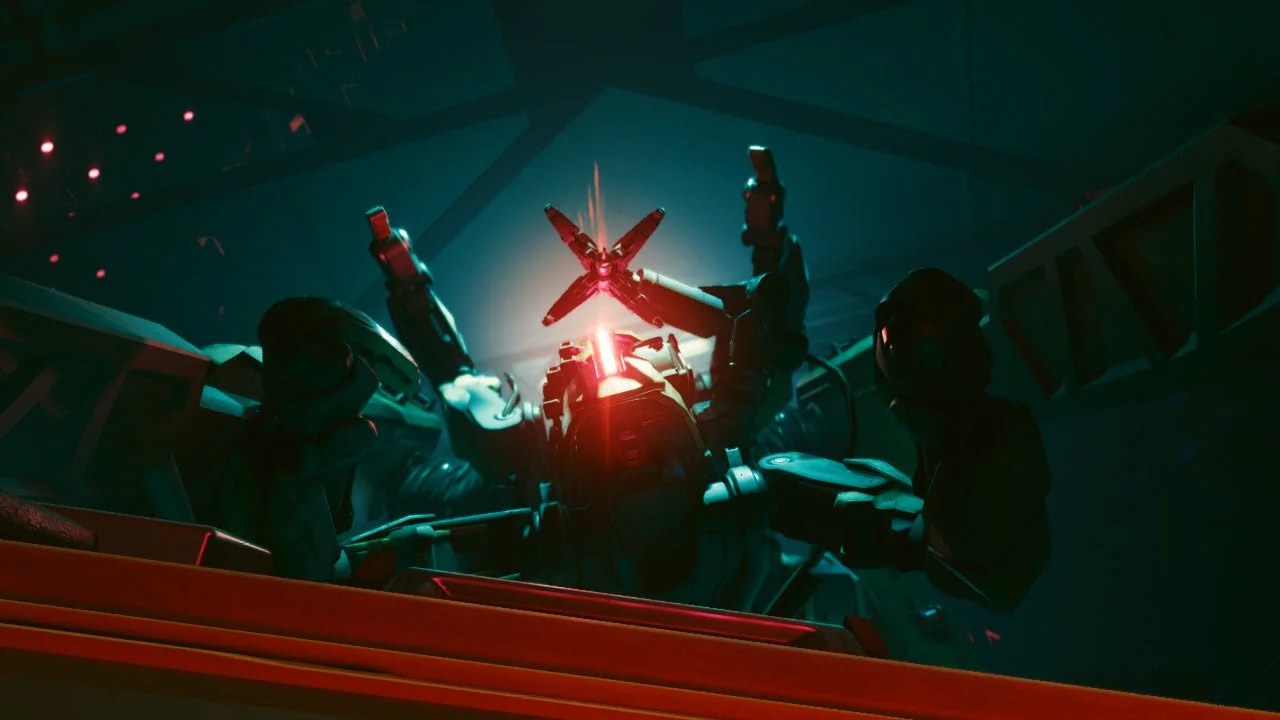
Image: CD Projekt Red
My frustration was only exacerbated by the fact that a bug occurred when the enemy ended up in a hallway in which it was supposed to patrol to give the player opportunities to sneak past. Instead, it just stayed in place at the end of a hallway. This prevented me from progressing because I could not pass through the hall without being spotted and immediately killed. Since this happened on one of the last missions of the DLC, you can imagine how this only made me want to finish everything faster.
Presentation
If you were already using visual mods to upgrade the look of the game, there are no significant changes to the overall presentation of the game with Phantom Liberty, which isn’t really a bad thing because the visual updates from CD Projekt Red still do a great job of making everything look good, even on old hardware. There are some new cosmetics and new weapons that will add to V’s style. The voice acting of the new characters is all fine. Idris Elba sounds like he’s a little more enthusiastic than Keanu, but not by that much. The main change of note is the addition of Dogtown.
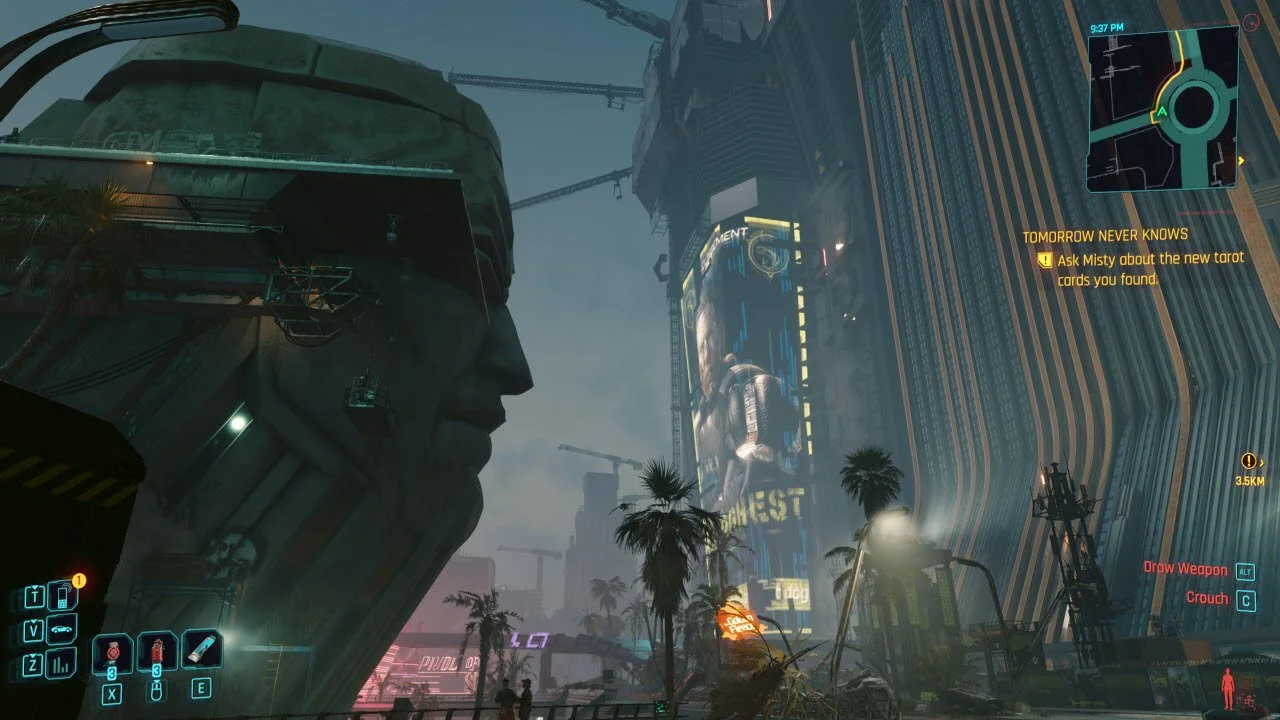
Dogtown is definitely a district that looks very different from most other areas in Night City. There are numerous areas that require you to navigate them vertically or through narrow alleyways that suit the story of how this place was established within a former warzone and turned into a reinforced zone. The downside is that it is a crumbling waste of a place with a lot of dilapidated areas or buildings that are damaged beyond repair. Aside from a few specific areas, it’s not aesthetically that interesting. Essentially, Dogtown narratively fits as a random district, but it’s neither fun to navigate nor admire for its looks.
One Last Thing…
I think it’s cool that the developers of Phantom Liberty created branching paths—short as they may be—in their DLC to the point that if you make certain choices, you can get certain characters killed or have entirely different missions as a result of your choices, or even a special ending to the main game story that you wouldn’t normally get without the DLC. It’s something that you don’t see often in modern video game design, in which a developer is okay with a player not experiencing everything the designer created. So I want to give credit where due, even if things used to be a lot more dynamic in the past. That doesn’t change the fact that I made my choice with the story because I was playing V a certain way, and I also thought that the characters of Phantom Liberty were lame, aside from Reed. As a result, I went down a story path that was probably the most in-depth when it came to character backstory, but the downside was I didn’t like or care about the characters enough for it to matter.
The choices I made also put me on the route that involved the frustrating Alien: Isolation mission. I like horror, and I like horror video games, but I thought this mission sucked from start to finish for the reasons I listed above. What’s worse is that even after I had the experience of the robo-xenomorph not patrolling like it was supposed to, I didn’t just have to reload a previous save. I had to actually break the AI of the enemy to proceed, using grenades and distractions to overload the game and stop the thing in its tracks. It was clearly not the “right” way to do it, but the fact that it became the only way to proceed further cemented my opinions about the mission and overall experience. Had I chosen a different story path, I might have ended up with a mission more tolerable and better designed, but I got the one that broke multiple times and played like crap, making me uninterested in how the other missions played. Perhaps you might have a better time than I did with Phantom Liberty, but I thought the story was overly indulgent, the characters dull, and the improvements less than substantial.
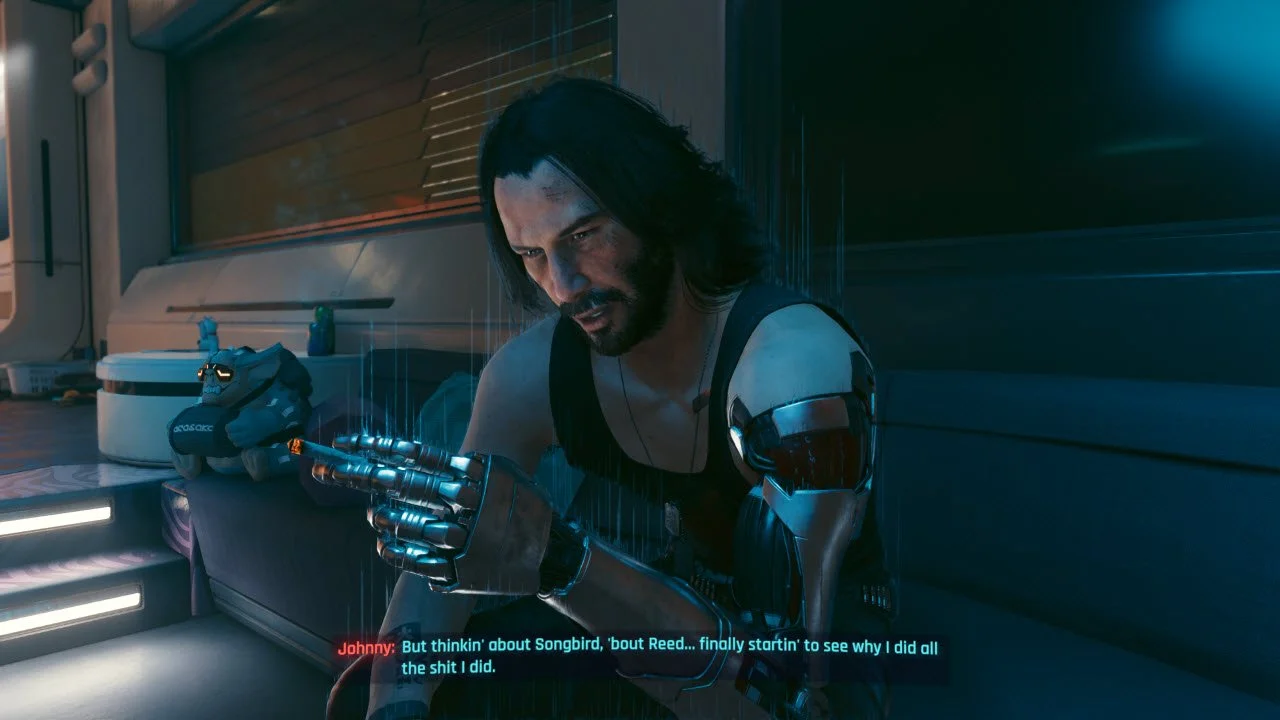
Image: CD Projekt Red
TL;DR
Phantom Liberty does not bring a whole lot to the table that makes it worth your time. It’s cool to get a level cap increase to make V that much more powerful. There are some cool new weapons to get along the way. However, its main storyline is very self-indulgent without having any right to be. It forces mechanics into its missions that were done better in other games. It tries to make you care about characters or think they’re cool when very little is done to make them stand out or be interesting. It adds an area to the map that’s not the most fun to navigate or interesting to look at. A lot of it felt like a slog to get through. If I ever play Cyberpunk again, I’ll probably avoid Phantom Liberty’s content.